


Hello Capitalists!
Get the edge on what you need to know today:
Capitalist Insider: Clarity died Tuesday. Tokenized U.S. stocks are legal Thursday
Bank of England holds rates at 3.75% and kills long-dated gilt sales
Jobless claims plunge to 196k the morning after Warsh’s hike, lowest since mid-July
Housing just split in two. Houses up +7.6%. Apartments down −22.5%.
Sponsored by Finance Buzz
Trump wanted 1%. His Fed chief just hiked to 4%.
The Federal Reserve voted 12-0 Wednesday to raise its benchmark rate a quarter point to 3.75%–4%, the first hike since July 2023, and most officials still see another increase this year.
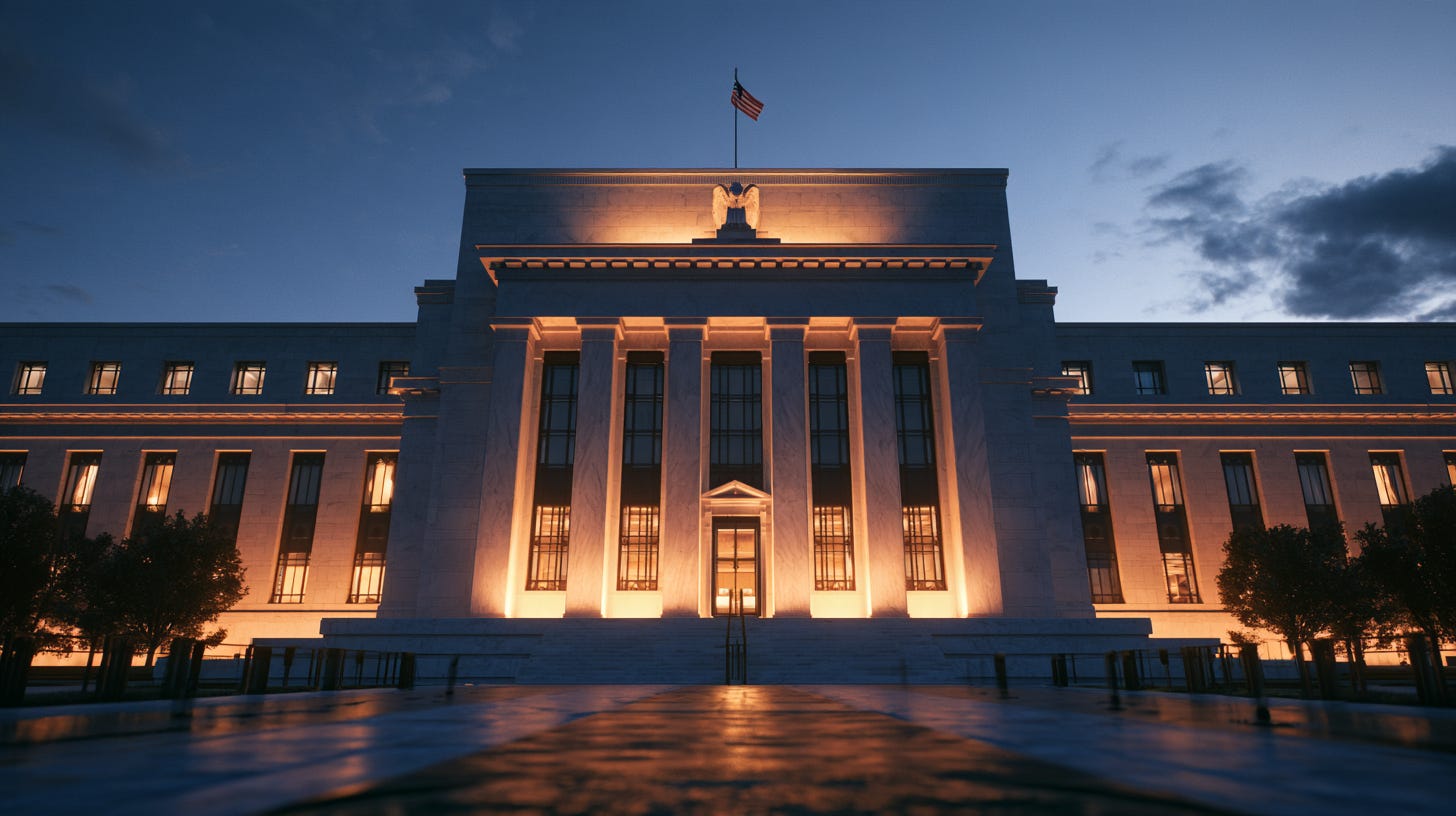
Dots still point higher: Sixteen of 18 participants expect another 2026 hike, and four of those see two more. Chair Kevin Warsh again submitted no dot. The median path holds in 2027.
Warsh calls policy easy: Inflation has been “too high … for too long,” he said, and he would be “hard-pressed to describe broad financial conditions as restrictive.”
Forecasts moved up: Officials lifted 2026 PCE inflation to 3.7% and core to 3.4%, both 0.1 point above June. They do not see the 2% target until 2029. Unemployment is projected at 4.1%.
Trump wants 1%: Hours later Trump wrote that U.S. rates “should be 1%, or less.” He said he still relies on Warsh, told him before the vote he “might as well vote with the board,” and wants him “independent.”
Capitalist Insider: Clarity died Tuesday. Tokenized U.S. stocks are legal Thursday

Hello Capitalist Insiders!
Sponsored by Finance Buzz
Credit Card Debt?
Pay no interest for up to nearly 2 years
with this no annual fee card

If you’re struggling to pay down high interest debt (or you’re planning a major purchase this year), this might be the exact thing you need.
There are cards that allow you to completely pause credit card interest into 2028.
This extremely powerful card gives you 0% intro APR into 2028 on balance transfers and purchases.
That’s right — you can now finance large purchases you’ve been sitting on without paying massive interest. Or, transfer crippling high interest debt to this card and let your payments go directly to paying down your balance, without piling on additional interest charges — all with no annual fee.
West Texas Intermediate oil flirts with $100 after Saudis open an Oman workaround
Brent crude fell 2.6% to $103.05 Thursday after Saudi Arabia offered extra Asian cargoes through ship-to-ship transfers near Oman’s Sohar, easing fears a damaged pipeline would choke exports.

Shuttle workaround used: Vessels carry crude through the Strait of Hormuz and load tankers waiting outside, so those ships can avoid sailing into the Gulf under Iranian-attack risk.
Transfer volumes jumped: Ship-to-ship moves in the Gulf of Oman rose to 2.7 million barrels a day from 1.5 million in August, Kpler’s Matt Smith said. WTI last traded at $100.55, down 1.8%.
Repair clocks clash: Energy Secretary Chris Wright said the Saudis took “quick action” with U.S. military help and called the East-West outage a brief interruption measured in days.
Disruption risk lingers: Rapidan still sees Saudi exports down 400,000 barrels a day this month and said risk stays skewed toward a larger hit if the outage lasts past September or Iran, the Houthis, or proxies escalate.
Bank of England holds rates at 3.75% and kills long-dated gilt sales
The Bank of England held its key rate at 3.75% in a 6-3 vote Thursday, diverging from the Federal Reserve, and paused gilt auctions while rewriting its tightening plan.
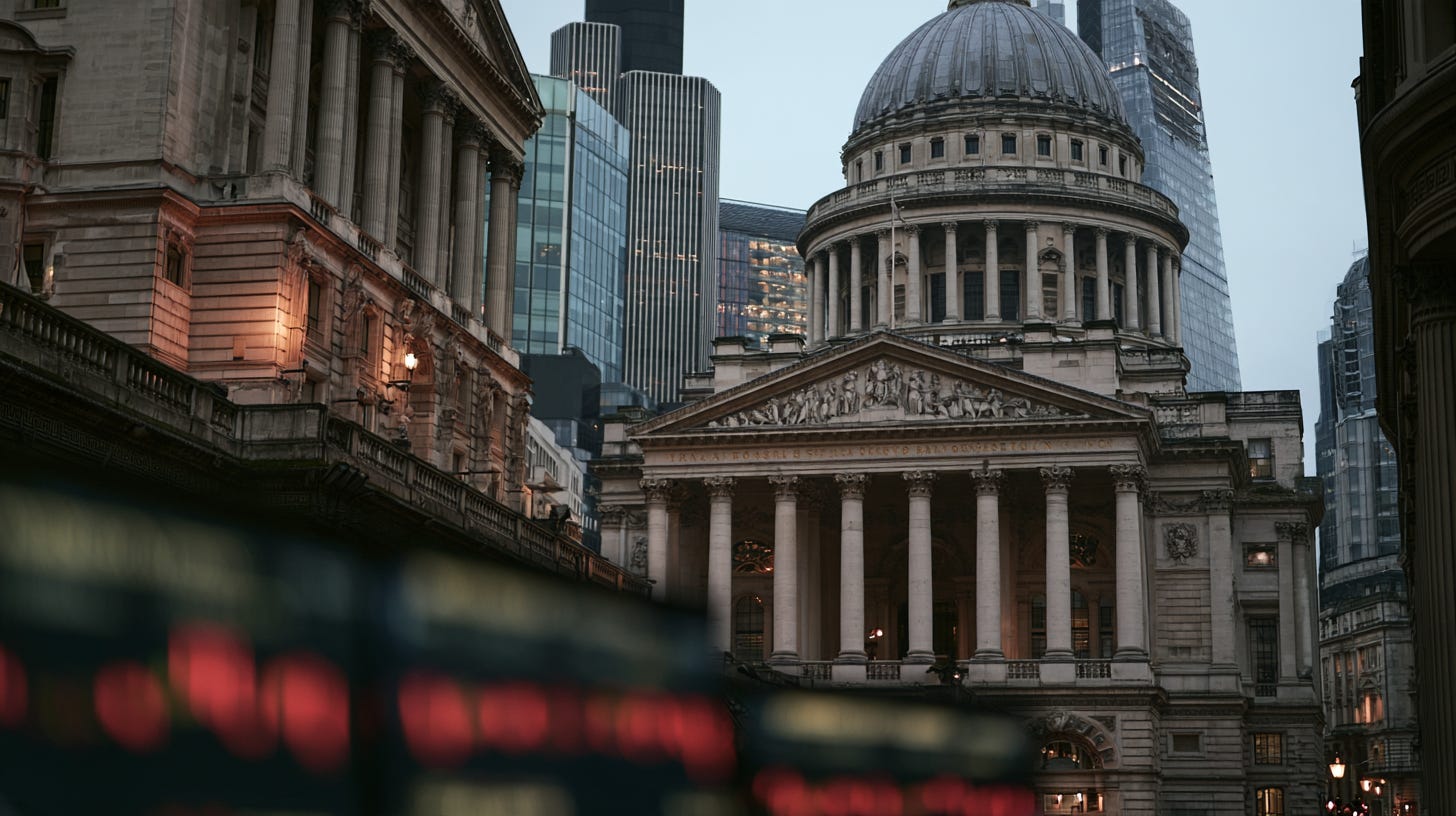
Three dissenters hiked: Huw Pill, Megan Greene, and Catherine Mann voted to raise rates. Officials saw little second-round wage and price pressure so far but said those risks have grown.
Portfolio runoff mapped: The Bank will unwind a £488 billion ($650 billion) gilt stock by 2034 and keep £120 billion of 2049-or-later bonds against future banknote issuance.
Sales go quiet: The remaining £146 billion of 2035–2049 gilts would be sold at £20 billion a year, possibly to the Debt Management Office. All planned QT auctions pause until April.
Losses already booked: Quantitative tightening has cost taxpayers £110 billion since 2022. Governor Andrew Bailey told Chancellor John Healey the overhaul “preserves the independence of monetary policy.” Gilt yields fell about 10 basis points.
Stocks rebound as the 10-year slips back under 5%
U.S. stocks climbed Thursday after the Federal Reserve’s first rate increase in three years, as Treasury yields and oil prices eased and investors treated the hike as inflation insurance.
Indexes bounce early: The S&P 500 and Nasdaq Composite jumped about 1% and 1.4% at the open. The Dow traded at 51,758.11, up 296.21, or 0.58%.
Yields slip back: The 10-year Treasury yield fell 5 basis points to about 4.94%. Brent crude changed hands near $102 a barrel and West Texas Intermediate traded near $100.
Chip stocks lead: Nvidia rose more than 2%, and the other Magnificent Seven names were higher in premarket trade. Bitcoin gained about 1% to hold above $76,000; gold stayed above $4,400.
Independence read mixed: Manulife’s Matthew Miskin said the meeting “does make them look independent” and “adds trust to the market,” but warned the Fed “may have come off a little too hawkish.”

Jobless claims plunge to 196k the morning after Warsh’s hike, lowest since mid-July
Weekly U.S. applications for unemployment benefits fell to 196,000 last week, the fewest since mid-July and well below forecasts, another sign layoffs remain scarce.

Claims beat forecasts: Applications dropped from 206,000 the week before. Economists had expected 207,500, FactSet said. The four-week average slid to 203,250.
Layoffs stay rare: Claims have mostly held in a 200,000-to-230,000 range for the past year. Businesses remain reluctant to cut staff after the labor shortages that followed pandemic lockdowns.
Hiring stays modest: Employers added an average 80,000 jobs a month this year, including 162,000 in August, below the 166,000 monthly average in 2023 and 2024.
Unadjusted series historic: On an unadjusted basis, last week’s initial claims were the lowest since 1969. Continuing claims fell to the lowest level since January 2024.
Housing just split in two. Houses up +7.6%. Apartments down −22.5%.
U.S. single-family housing starts jumped 7.6% in August, but overall construction fell 2.6% as apartment work and permits dropped and mortgage rates hit a more than 1-year high.
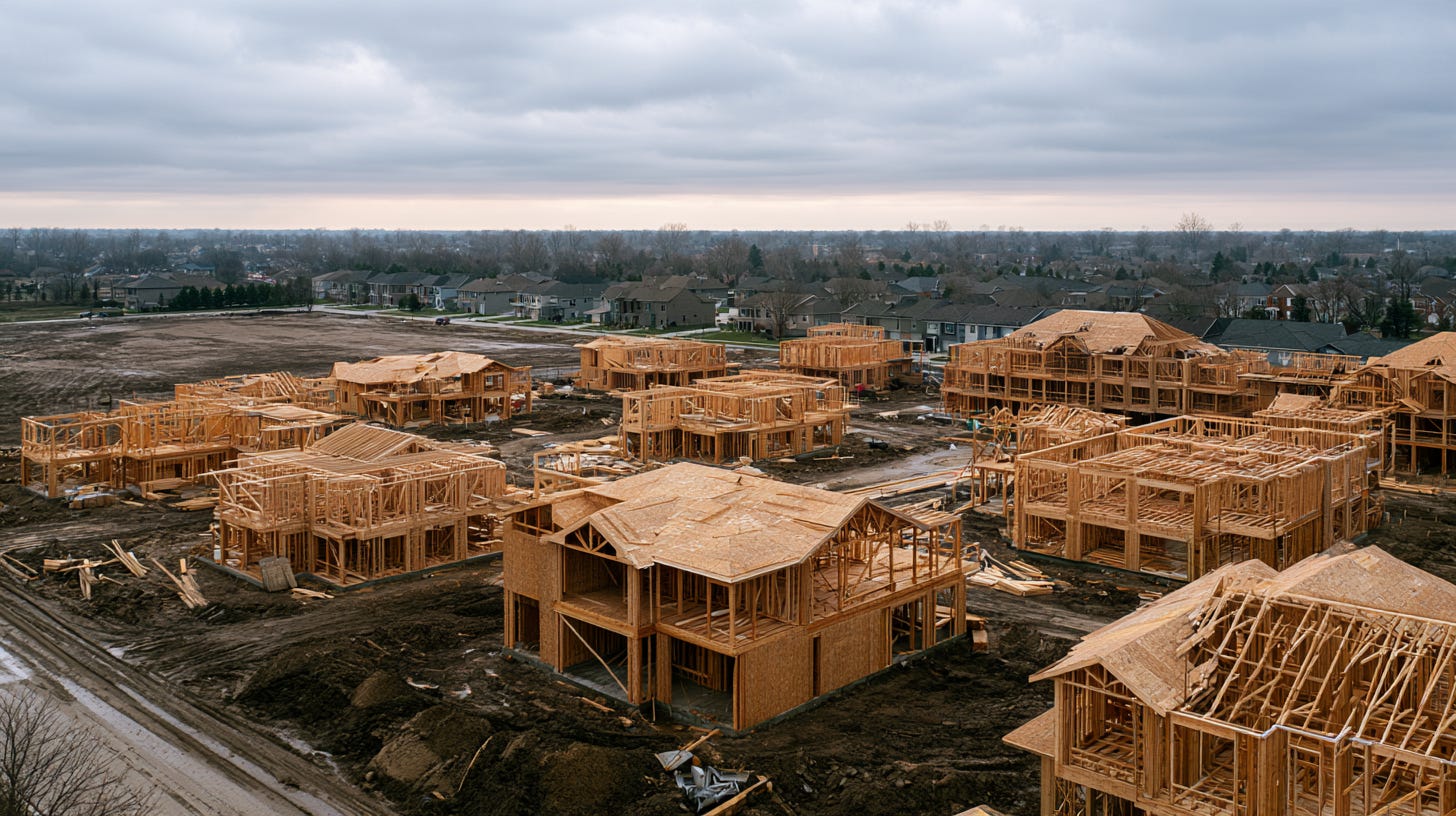
Census print mixed: Single-family starts rose to a 918,000 annual rate, up 5.2% from a year earlier. Permits for those homes fell 1.8% to 878,000 units.
Apartments dragged totals: Starts on buildings with 5 or more units plunged 22.5% to 344,000. Overall starts ran at 1.275 million, down 1.2%; total permits fell 2.7% to 1.394 million.
Mortgage rates climbed: The average 30-year fixed rate was 6.76% last week, Freddie Mac said, the highest in more than a year and up from 6.71% the week before.
Builder mood sank: Single-family builder sentiment fell to a 1-year low in September, the NAHB said Wednesday, blaming higher rates, labor shortages from an immigration crackdown, and tariff-driven material prices.