


An op-ed from The Capitalist. Reporting from the Faja Petrolífera del Orinoco, Venezuela.
Stand on a service road in the Orinoco Belt at seven in the morning and the first thing you notice is the noise. Not the heat, not the flare stacks on the horizon — the noise. Pumpjacks working. Trucks moving water. Crews on radios. Two years ago most of this acreage was silent, and the silence had lasted the better part of a decade.
That it is loud again is the most underreported economic story in the Western Hemisphere. And it traces back, directly and unambiguously, to a decision President Trump made in the first days of January.
The operation
On January 3, U.S. special operations forces went into Caracas and took Nicolás Maduro out of Venezuela. He was flown to New York to face narcotrafficking charges that had been pending against him for years. His wife went with him. The whole thing was over before most of the world had finished its first cup of coffee.
The critics were ready before the wheels were up. They called it imperialism. They called it reckless. They said it would trigger a regional war, collapse the Venezuelan state, and send a wave of refugees north that would dwarf anything the hemisphere had seen.
None of that happened.
What happened instead was that a narco-state with the largest proven oil reserves on earth — roughly 303 billion barrels, about 17 percent of the global total — began, within weeks, the process of rejoining the legitimate world economy. Political prisoners started walking out of El Helicoide, and by early March more than six hundred had been released. The detention center itself is slated to become a cultural and sports facility. American energy executives who had not set foot in Caracas in twenty years were on the ground by February.
Say what you want about the method. Judge it by the result. Twenty-seven years of Chavismo produced a country that could not keep the lights on while sitting on more oil than Saudi Arabia. Seven months of a functioning U.S.–Venezuela relationship has produced the fastest production recovery in the country’s modern history.
The Capitalist is a reader-supported publication, support our fight to beat the mainstream media!
Delcy
The second decision that made this work was Trump’s, too, and it was harder than the first.
When Delcy Rodríguez was sworn in as acting president on January 5, the easy play for Washington was to install a favorite from the opposition and call it democracy restored. Trump didn’t do that. He looked at the actual balance of power inside Venezuela, concluded that Rodríguez was the person who could deliver, and decided to work with her.
Secretary of State Marco Rubio — who has spent his entire public career on Venezuela and knows the file better than anyone in American politics — reached the same judgment. That is not a small thing. Rubio had every political incentive to demand a maximalist outcome. He chose the outcome that would actually happen over the one that would have felt better in a press release.
Rodríguez has held up her end. She and Trump spoke by phone on January 14, and the President described it afterward as a very good call covering oil, minerals, trade, and national security. He has said publicly, more than once, that she is doing a fantastic job. The day after, in her first state of the union address, Rodríguez went before the National Assembly and called for opening the oil sector to foreign investment — a direct repudiation of the resource nationalism that has been Chavista scripture since 1999. She proposed routing oil revenue into two sovereign wealth funds, one for the collapsed health system and one for infrastructure.
Then she signed the reforms into law on July 8.
Consider what this woman has actually done. She inherited a government in which a substantial faction wanted to fight the United States, took the opposite course, and has held that course for seven months while dismantling the security apparatus that kept her own party in power. Whatever one thinks of where she started politically, the record since January is a record of delivery.
Energy Secretary Chris Wright went to Caracas on February 11 and promised to power a dramatic increase in Venezuelan output. By that same month, revenue from Venezuelan crude sales had already crossed a billion dollars, with the oil moving to American and European refineries. Trump has said U.S. companies will put at least $100 billion into rebuilding the country’s oil infrastructure.
How far the fall went
To understand what is being rebuilt, you have to understand what was lost.
In 1970, Venezuela produced 3.75 million barrels per day. It was, for a stretch of the twentieth century, the most important oil exporter in the Western Hemisphere and the founding intellectual force behind OPEC. As recently as October 2002, output stood near 3 million barrels per day.
Then came the long unwinding. The politicization and mass firing of PDVSA’s technical staff. Two decades of deferred maintenance on some of the most demanding heavy-oil infrastructure on earth. Expropriations that taught every serious operator in the world to stay away. By the time sanctions tightened in 2019, production had already fallen to about a million barrels a day. In June 2020 it bottomed at 337,000 barrels per day — roughly nine percent of the 1970 peak.
Nine percent. In a country sitting on 1.36 trillion barrels of oil in place in the Orinoco Belt alone.
The recovery since January is real and it is measurable. OPEC secondary sources put June 2026 output just above one million barrels per day, a 17.6 percent increase over 2025. PDVSA reported July production at 1.2 million. Exports ran 1.16 million barrels per day in July, and — this is the number that matters for American drivers — cargoes to the United States hit roughly 786,000 barrels per day, the highest level since early 2019.
The Capitalist is a reader-supported publication, support our fight to beat the mainstream media!
Aldyl, and what technology actually does to a field
Which brings us to a 500-square-kilometer patch of the Faja and an Argentine company most Americans have never heard of.
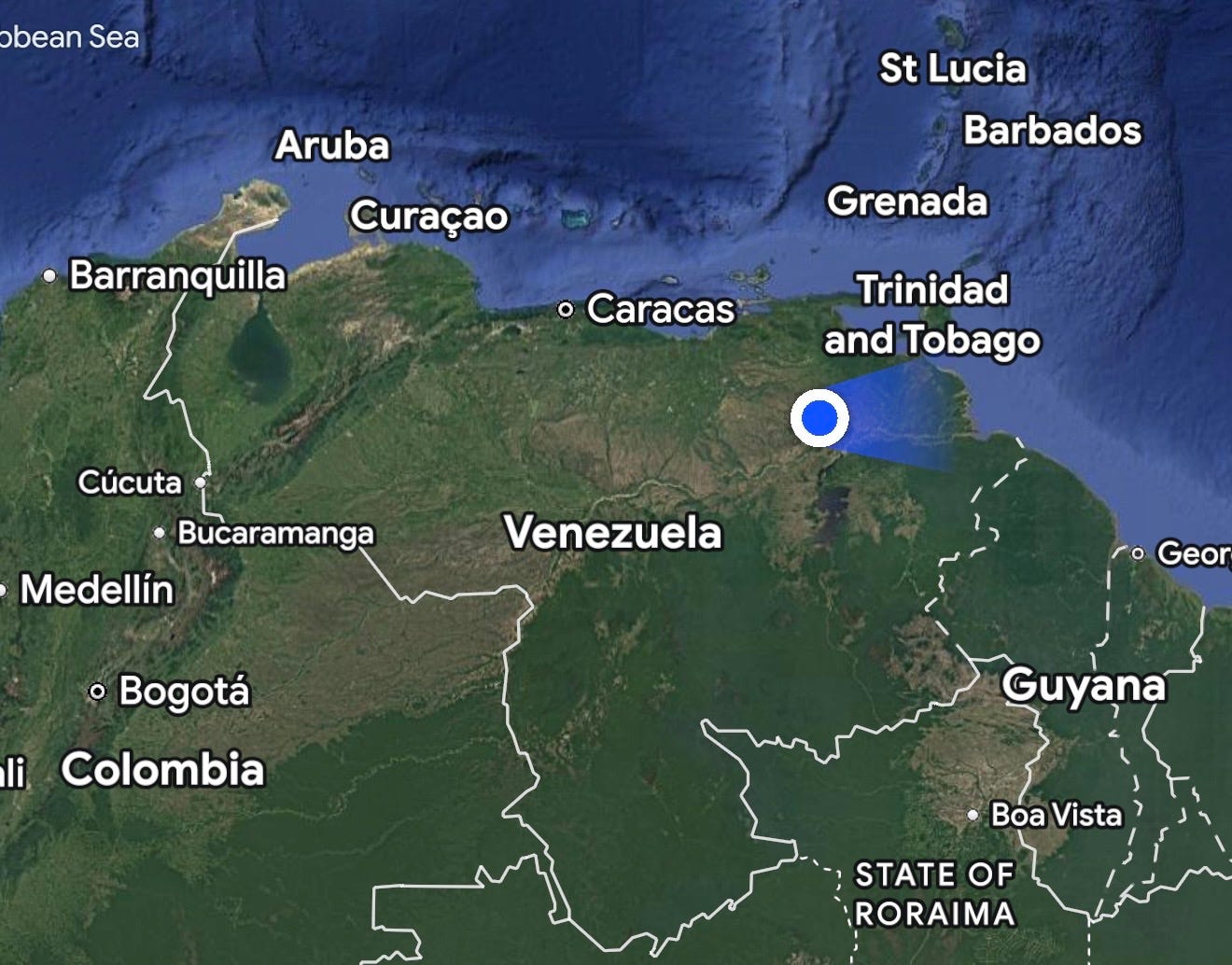
Aldyl Argentina S.A. was founded in 1979 as an infrastructure business — water and gas conduction — and spent four decades building a services operation across Argentina’s Vaca Muerta shale. It came to Venezuela in 2022 as a service provider in Morichal Pesado. As the investment framework changed, it formed a Venezuelan subsidiary, Aldyl Energía, and took over operation of a defined block within the field.
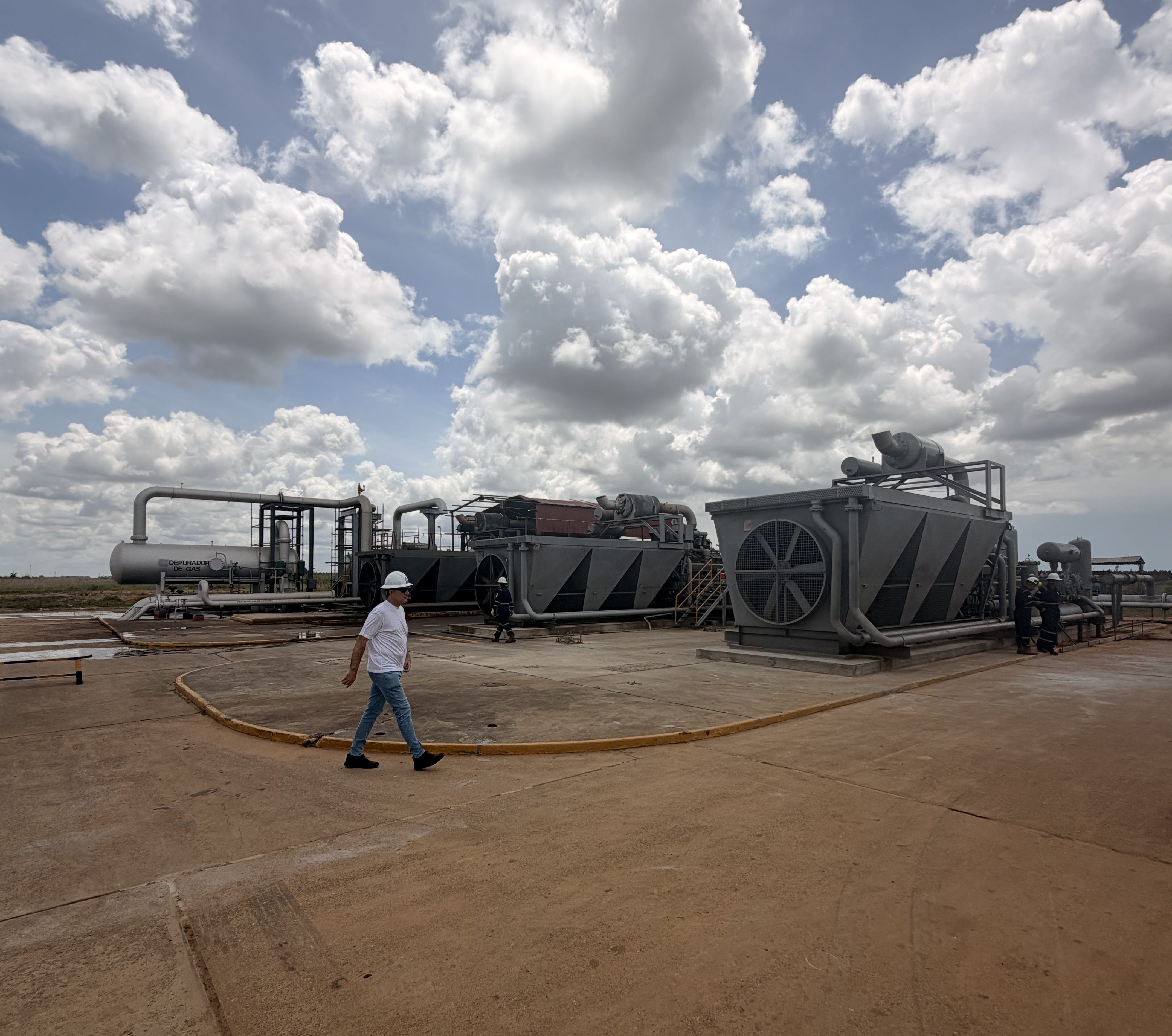
One clarification is worth making up front, because the figures that follow are easy to confuse with the headline numbers reported elsewhere. Morichal is a large field, most of it still operated by PDVSA, and total field output has been reported rising from roughly 45,000 to 65,000 barrels per day. Everything discussed below refers only to the 500-square kilometer block Aldyl itself operates — a portion of the field, not the whole of it. The comparison being drawn here is not Aldyl against PDVSA. It is Aldyl’s block today against the same block two years ago.
That acreage was producing 500 barrels per day when Rodríguez’s government allocated it. Five hundred. On a block that size, that number is not production. It is a rounding error on a decommissioning report.
Today Aldyl’s block alone produces close to 20,000 barrels per day.
Live look at crude extraction:
Julian Arostegui, Aldyl’s chief executive, is blunt about what separates his company from the rush of entrants that followed January.
“There are a lot of companies with a flag on a map in Venezuela right now. We are not that. We took a block producing five hundred barrels a day and we are producing close to twenty thousand. We have rigs on the ground and four hundred and seventy-six wells to reactivate. You cannot do that from an office in Houston or Buenos Aires. You do it by being in the field.”
Nobody drilled their way there. What Aldyl did instead is the actual story, and it is why the phrase Silicon Valley of crude is not a marketing line.
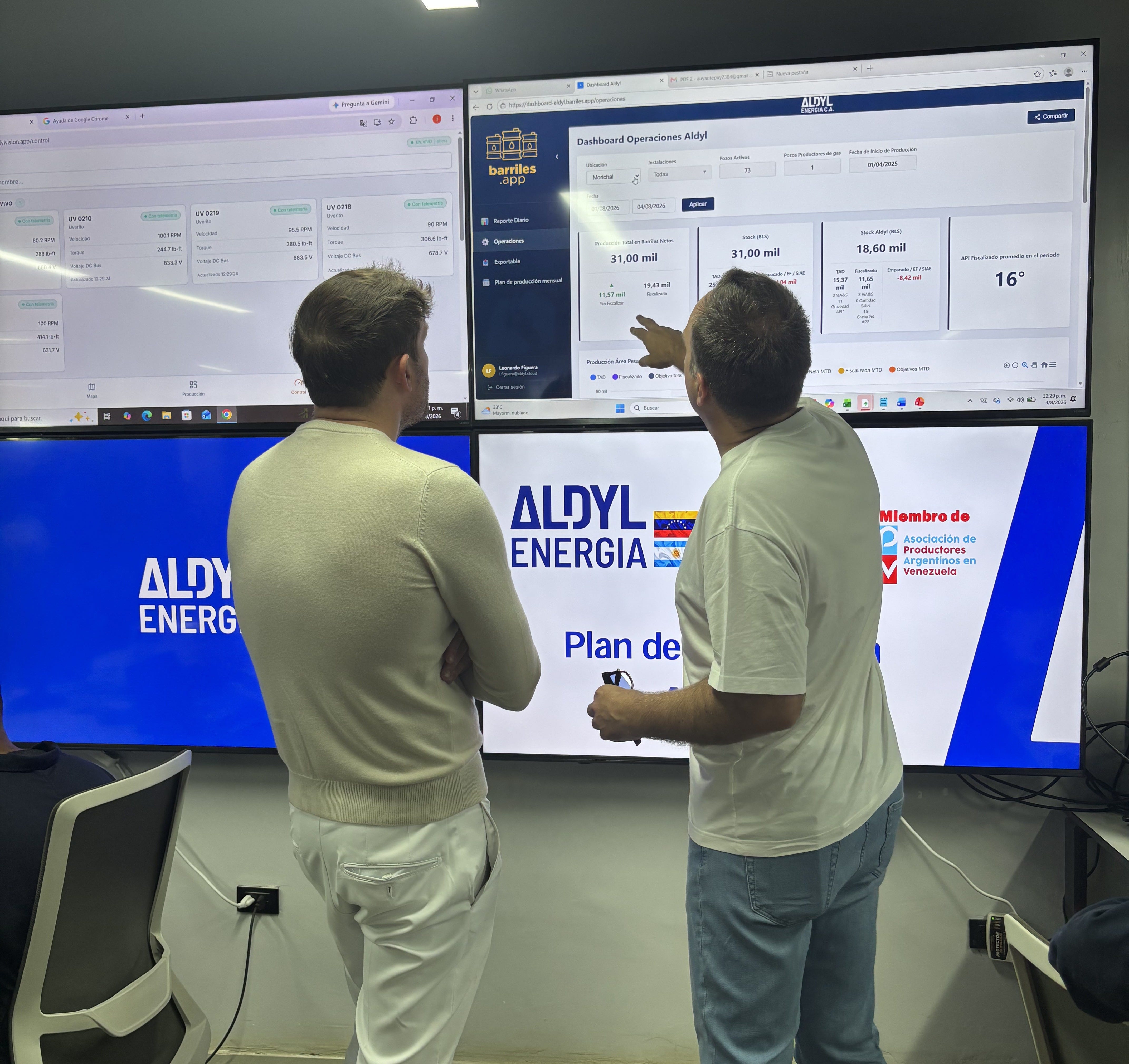
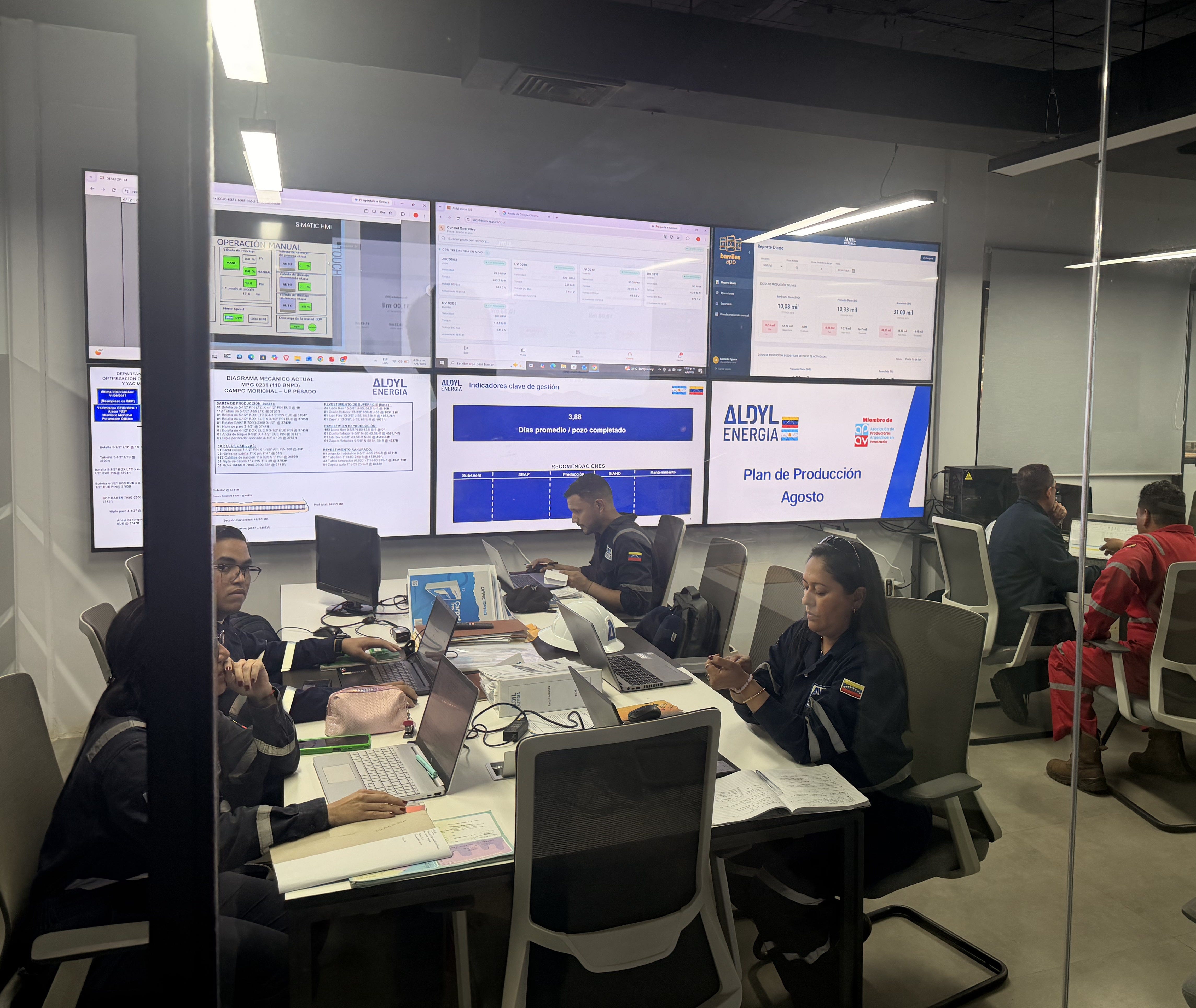
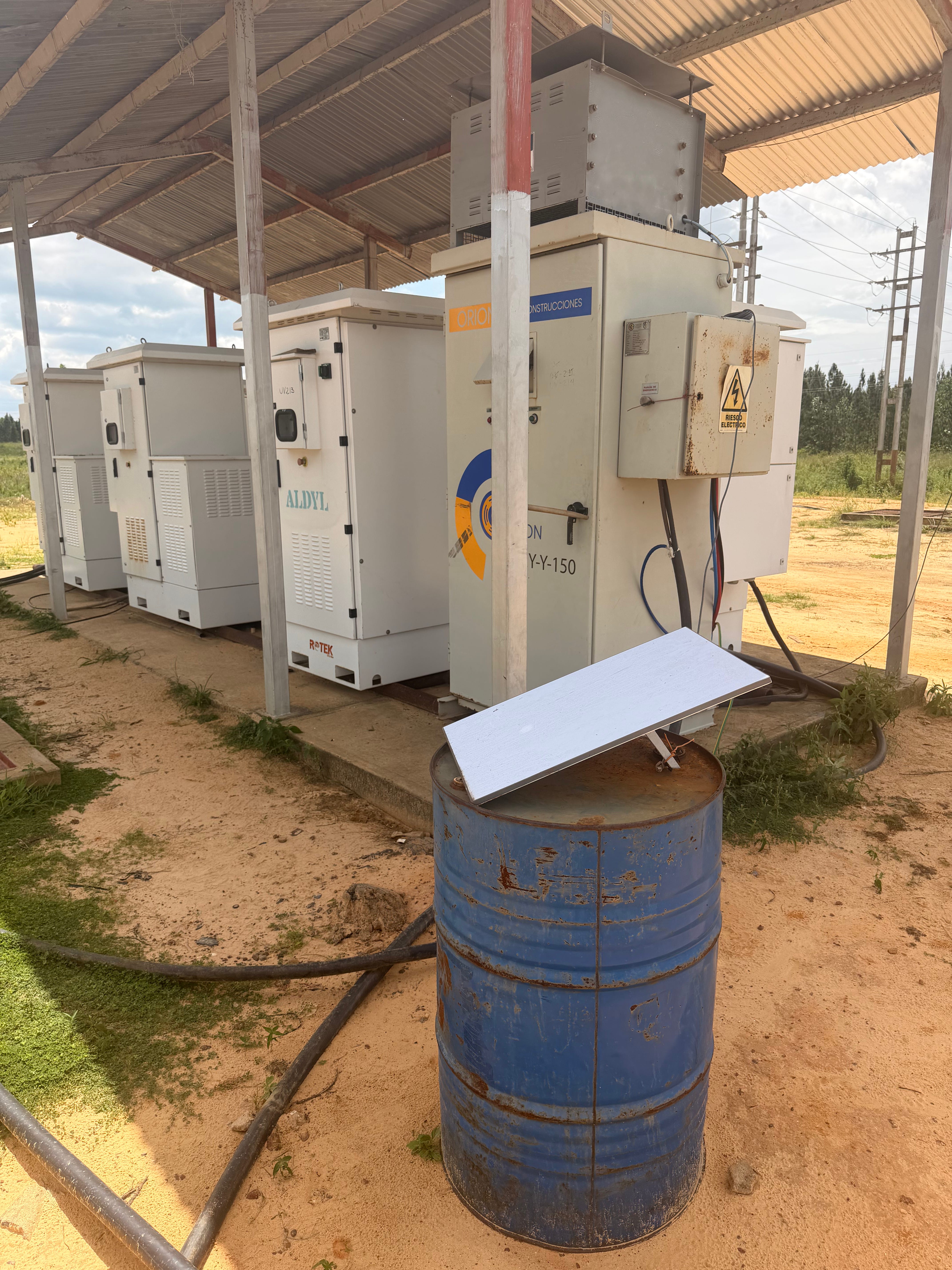
The company built its own software. Every well, every battery, every line on that 500 square kilometers reports into a real-time production monitoring system that Aldyl developed in house. Management indicators — not monthly, not weekly, but continuously. From that data layer they run AI-driven models for the things that historically ate the margins of every heavy-oil operator in the Faja: which wells to intervene and in what order, how to allocate crews and equipment across a field where a bad dispatch decision costs a day of production, where the next infrastructure dollar earns the highest return, how to staff a shift a month from now.
This is the part American energy investors should sit up for. The Orinoco has always been a megaproject basin — enormous capital, enormous timelines, enormous upgraders, and a decade before anyone sees a barrel. Aldyl is demonstrating a different model: take existing, degraded, apparently worthless acreage and multiply its output forty-fold through instrumentation, analytics, disciplined intervention, and relentless reinvestment of proceeds. It is closer to how a software company scales than how an oil major builds.
And they are reinvesting. Every dollar of margin has gone back into infrastructure and into people. On July 8, Aldyl unloaded four Drillmec rigs at the port of Guanta in Anzoátegui, off a direct charter from South America — a $20 million shipment that brings its total capital committed on the block to roughly $100 million. Three more H200 rigs land in September. The campaign now beginning targets 476 well reactivations and 79 new wells across 2026 and 2027, with a stated goal of 80,000 barrels per day from Aldyl’s acreage alone — more than the entire Morichal field produces today.
Video footage of oil well workover operation:
For context on how thin the field has been: Baker Hughes has counted as few as two active rigs in the entire country this year. Aldyl just landed four.
The personnel investment is the part that surprised us most on the ground. Aldyl has built multiple housing projects for staff across the field. Not camps — housing. In a region where the workforce collapse was as severe as the infrastructure collapse, and where a generation of trained Venezuelan petroleum engineers scattered across four continents, a company that builds houses is a company signaling that it intends to be there in twenty years.
Ask Arostegui what actually unlocked all of it and he does not credit his own engineers first.
“Two years ago no one would have financed a single rig here. What changed was not the oil. What changed was that Washington and Caracas decided to work together, and suddenly a company like ours could plan in years instead of weeks. We are the proof of what that makes possible, and we did it in months.”
The Capitalist is a reader-supported publication, support our fight to beat the mainstream media!
The $100 billion objection
The most serious argument against everything written above comes from Francisco Monaldi, who runs the Latin America Energy Program at Rice University’s Baker Institute and is probably the most cited authority on Venezuelan oil economics alive. His assessment: rebuilding the country’s corroded infrastructure to sustain production above two million barrels per day will take roughly $100 billion and at least a decade. Other estimates in circulation run to $220 billion.
That number deserves a real answer rather than a dismissal, because it is doing enormous work in the market right now. It is the reason capital hesitates. It is the reason serious people describe the Venezuelan recovery as a mirage that will stall out somewhere around 1.3 million barrels.
So do the arithmetic on Aldyl’s block.
Monaldi’s estimate implies something close to $100,000 of capital for each incremental barrel of daily capacity — a hundred billion dollars to add roughly a million barrels a day. Aldyl has committed about $100 million on its acreage, and $20 million of that arrived last month as rigs for a campaign that has not yet produced a barrel. Call it $80 million of capital behind the production actually flowing today, against roughly 19,500 incremental barrels per day.
That is about $4,100 per incremental barrel.
Not eighty percent cheaper than the consensus. Not half. Roughly four percent of it.
The objection to this comparison is obvious and worth stating plainly: brownfield reactivation is the cheapest barrel in any basin. Aldyl is working acreage that was already drilled, already piped, already surveyed. Monaldi’s $100 billion covers a far wider scope — refineries, upgraders, export terminals, the power generation that has been the binding constraint on Venezuelan output for a decade, and eventually greenfield development in the deeper Faja where the capital intensity is genuinely brutal. The cheap barrels come first, and the marginal barrel gets more expensive from here. Anyone extrapolating $4,100 per barrel across the entire national recovery is selling something.
But grant all of that and the consensus estimate still looks badly overstated, for a reason that has nothing to do with geology.
Monaldi’s number assumes the cost structure of the industry that built the Faja — the megaproject model, where you spend a decade and tens of billions before first oil because that was the only way anyone knew to develop extra-heavy crude at scale. That model was designed in the 1990s. It priced in armies of field personnel, monthly reporting cycles, intervention schedules set by committee, and infrastructure built to a plan drawn years before anyone knew which wells would actually respond.
Aldyl is not paying those costs, because Aldyl is not running that operation. Continuous instrumentation across the field means the company knows which of several hundred candidate wells will repay an intervention before it sends a crew. Analytics-driven dispatch means the crew it sends is the right crew on the right day. Infrastructure follows demonstrated production rather than preceding it. Every one of those is a capital efficiency, and they compound.
There is a reasonable version of this argument and an unreasonable one. The unreasonable version is that one 500-square-kilometer block disproves Monaldi. It doesn’t — a single field is not a national capital plan, and honest advocates should say so.
The reasonable version is this: a large share of the first million incremental barrels in Venezuela sits on brownfield acreage that looks a great deal like Morichal Pesado, and there is now a live, operating demonstration that those barrels can be recovered at a small fraction of the assumed cost, on a timeline measured in quarters rather than decades. On one block, Aldyl went from 500 barrels a day to 20,000 in the time it would take a megaproject to complete a feasibility study.
If even a third of the country’s near-term recovery follows that template, the $100 billion figure is off by an order of magnitude on the portion that matters most — the portion that determines whether Venezuelan crude is flowing to Gulf Coast refineries in 2028 or in 2038. That is not a rounding error in a forecast. That is the difference between a hemispheric energy strategy that works and one that stays on a whiteboard.
The consensus was built by watching the old model fail. It has not yet priced in a new one.
Arostegui puts it less diplomatically.
“People said Venezuela would take a decade. We did forty times our production in under two years, on one block. The decade estimate was never about geology. It was about governance.”
The hemispheric case
The strategic logic of all this is straightforward, and it is exactly the logic Trump, Rubio, and Wright have been articulating since January.
Every barrel that comes out of the Orinoco is a barrel that does not have to come from the Persian Gulf, does not have to transit a strait that Iran periodically threatens to close, and does not have to be bought from a regime that funds people trying to kill Americans. It is a barrel produced roughly 2,000 miles from Gulf Coast refineries that were literally designed to process Venezuelan heavy crude and have been running below their optimal slate for years.
Affordable energy independence for the Western Hemisphere is not a slogan. It is an achievable engineering and capital allocation problem, and the constraint was never geology. Venezuela has the oil. The constraint was governance, and the governance changed in January.
Arostegui frames the ambition in terms of what this country used to be rather than what it has been.
“This country produced almost four million barrels a day. That capacity did not disappear — the geology is still there, the fields are still there. What was missing was the will to invest and a government that wanted the investment. Every barrel we bring back is a barrel the hemisphere does not have to buy from people who do not wish it well.”
Rodríguez wants production up. Trump wants production up. Rubio wants production up. Companies like Aldyl are the mechanism by which that shared goal turns into barrels — not through another twenty-year megaproject announcement, but through technology applied hard to acreage everyone else wrote off.
The Faja is loud again. Anyone who thinks that happened by accident wasn’t paying attention on January 3.
You don't hear about this is the news because the MSM, Fallon, Kimmel et.al would have to admit that they were wrong (again). Their opinions are being proven to be worthless and they are becoming redundant. Many Democrats are not happy at all with the direction their party is headed. They are seeing what is happening in NYC and want no part of that. The people of NYC are starting to kick back at the people who are destroying their city.
Well who needs Hormuz after this ?? Got that rag heads???