


Hello Capitalists!
Get the edge on what you need to know today:
Capitalist Insider: IEA dumps diesel barrels as oil slips on Hormuz risks
Together with Kalshi
Musk’s Tesla Roadster FLIES with SpaceX thrusters
Tesla unveiled its long-delayed next-generation Roadster Thursday at a SpaceX test site in McGregor, Texas, where the two-seater used cold-gas thrusters to fly and flip midair while claiming sub-second zero-to-60 acceleration and fueling merger talk.

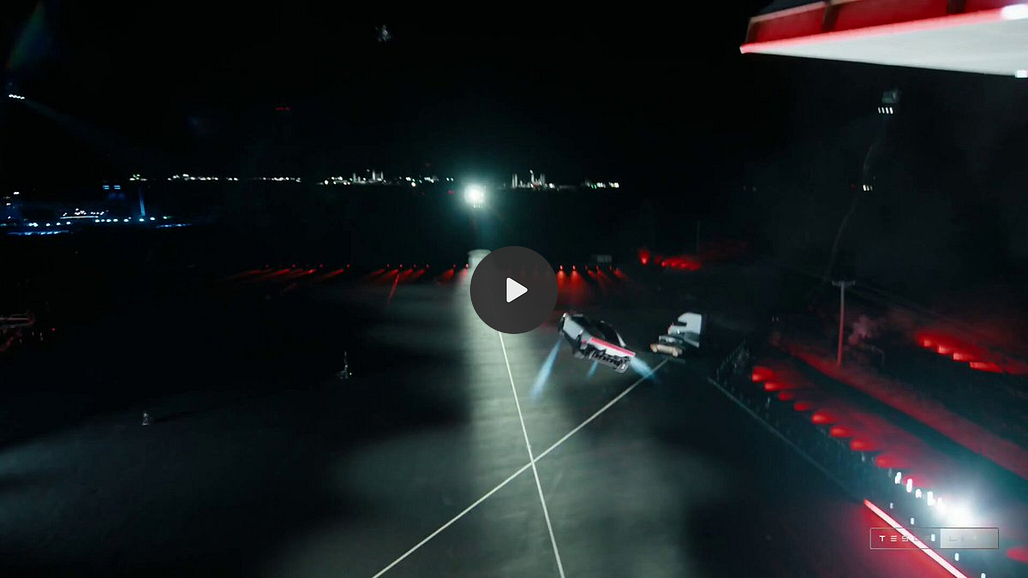
Flying demo thrusters: The white prototype drove upside-down on a curved ramp using a fan suction system that can generate up to 2Gs, then launched off, flipped and landed using 10 SpaceX-designed cold-gas thrusters fed by about 600 liters of compressed air.
 NOBUNAGA🇯🇵🏯_夏樹蒼依@japan_nobunagaEvery insane thing the Tesla Roadster did. One video. 🔥 Wait for the last flip.
 4:30 AM · Oct 16, 2026 · 238K Views99 Replies · 527 Reposts · 6.84K Likes
Sub-second acceleration: Versions with thrusters accelerate from zero to 60 mph in under one second and are rated for a top speed above 230 mph, with production set for 2028.
Three trims deposits: The Performance trim requires a $50,000 deposit, the Thrust trim $250,000 for rear acceleration thrusters, and an invite-only Rocket variant adds a full flight system as a single-seater.
Merger odds climb: Musk highlighted the collaboration between the world’s best car and rocket companies. Kalshi odds for a deal before March 2027 rose above 50%, while Barclays has flagged a possible combination by year-end.
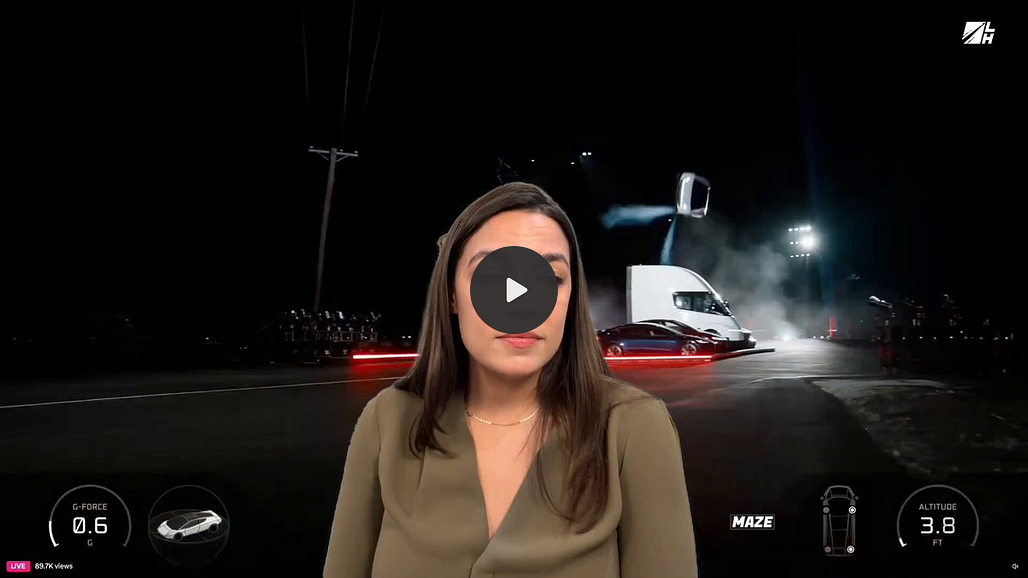
 Freedom 🇺🇸🦅@PU28453638OMFG, this is the funniest thing you will see tonight. 🤣😭😭
 3:06 AM · Oct 16, 2026 · 412K Views174 Replies · 738 Reposts · 6.43K Likes


Odds surge on Tesla merging with SpaceX before 2028
The odds of Tesla merging with SpaceX before 2028 have surged according to the latest data from Kalshi.

Elon’s Mega Corp: Elon Musk, fresh off the back of the SpaceX IPO has been rumored to be debating the move.
A Pattern Emerging: Prior to the SpaceX IPO several of Musk’s ventures were brought in under the SpaceX umbrella. This included the satellite internet division Starlink and the xAI division which runs the AI model Grok.

Do you think Tesla will be acquired by SpaceX?
Get $25 in credit on Kalshi after you sign up using our code “brawl” or by using our link.
CoreWeave founders dump $3.3B as Credit Default Swaps hit distress
CoreWeave’s credit default swaps (CDS) widened to distressed levels above 1,000 basis points Thursday as bond yields topped 15%, even as the three co-founders had already sold $3.3 billion in stock since the 2025 IPO.

Credit stress details: Five-year CDS spreads reached as high as 1,140 basis points and last stood near 1,038, while the 2031 notes yielded 15.78% to maturity amid more than $50 billion in debt and obligations.
Founder sales: Michael Intrator, Brian Venturo and Brannin McBee sold $3.3 billion total since the March 2025 IPO, including $2.4 billion this year, yet still hold about 20% of the company.
Market reaction: Shares plunged 15.5% Wednesday then recovered to close Thursday up 5.94%, with Nvidia’s Jensen Huang saying the cost of capital is decreasing and no backstop is needed.
Broader AI debt: Evercore called the market’s stance “no mas” to AI debt without operating cash flow support, as Oracle CDS also widened.
Capitalist Insider: IEA dumps diesel barrels as oil slips on Hormuz risks

Hello Capitalist Insiders!
Buy-the-dip calls ignored as Micron falls under $1,000
Micron shares fell below $1,000 early Friday amid fears of Chinese competition and AI durability doubts, even as analysts called the selloff an overreaction and urged buying the memory dip ahead of further price gains.

Price and performance: Shares were down 3.5% at $899.15 in early trading after more than tripling this year and peaking above $1,200 in the summer.
Competition and AI doubts: Investors worried about China’s CXMT advancing in conventional server memory and questioned whether the AI boom can last, though CXMT is not seen threatening high-bandwidth memory for AI servers.
Analyst support: Fundstrat’s Kent Fung called the CXMT reaction an overreaction and another reason to buy the dip, while KeyBanc’s John Vinh reiterated a $1,750 target and said shortages should persist beyond 2028.
Pricing outlook: DRAM prices are expected to rise 15% to 20% in the fourth quarter, with Google considering long-term supply deals through 2035 and Micron remaining one of three major global suppliers.
Investors cut Anthropic valuation target by $500 billion
Prospective Anthropic IPO investors discussed a roughly $1.5 trillion valuation after Wednesday’s investor day, down from prior $2 trillion expectations as sequential revenue growth slowed.

Revenue figures: Third-quarter revenue rose 45% sequentially to $16.8 billion, after more than doubling from the first to the second quarter at $11.6 billion.
Profitability note: The company said it was profitable on an adjusted basis in the quarter, though some investors focused on the deceleration.
Prior expectations: Earlier projections had targeted about $2 trillion for the November share sale.
Context: Last year’s revenue was nearly $4.6 billion with an operating loss above $8 billion excluding certain charges.
Netflix axes top Content chief after torching 1000 jobs
Netflix is replacing content chief Bela Bajaria with Peter Rice just days before earnings, after cutting about 1,000 jobs, or 6% of its workforce, and signaling a sharper focus amid slowing growth.

Leadership change: Bela Bajaria, in the role since 2023 after a decade at the company, exits immediately; Peter Rice, formerly of Disney and Fox, takes over next week.
Job cut scope: The reductions, the largest since 2022, primarily affect product, technology, human resources and legal teams as the company prioritizes resources.
Growth context: Co-CEO Ted Sarandos has said the company is “not growing as fast as I want us to,” with shares down sharply over the past year.
Timing note: The moves come ahead of third-quarter results next week and follow a lost bid for Warner Bros. Discovery assets.
KFC dumps Pepsi for Coca-Cola after nearly 40 years
KFC will replace Pepsi with Coca-Cola at its roughly 3,700 U.S. restaurants by spring 2027, ending a partnership that began when PepsiCo acquired the chain in 1986.

Transition timeline: The switch starts in January 2027, with all U.S. locations expected to complete the change by spring.
Partnership history: The beverage deal continued after PepsiCo spun off KFC in 1997 under Yum! Brands, lasting nearly four decades.
Company comments: KFC President Catherine Tan-Gillespie framed the move as modernizing the chain; Coca-Cola’s Dagmar Boggs highlighted pairing with the food menu.
International note: PepsiCo retains the beverage relationship with KFC’s international restaurants and other Yum brands such as Taco Bell.