

Support The Capitalist’s journalism by becoming a paid subscriber:
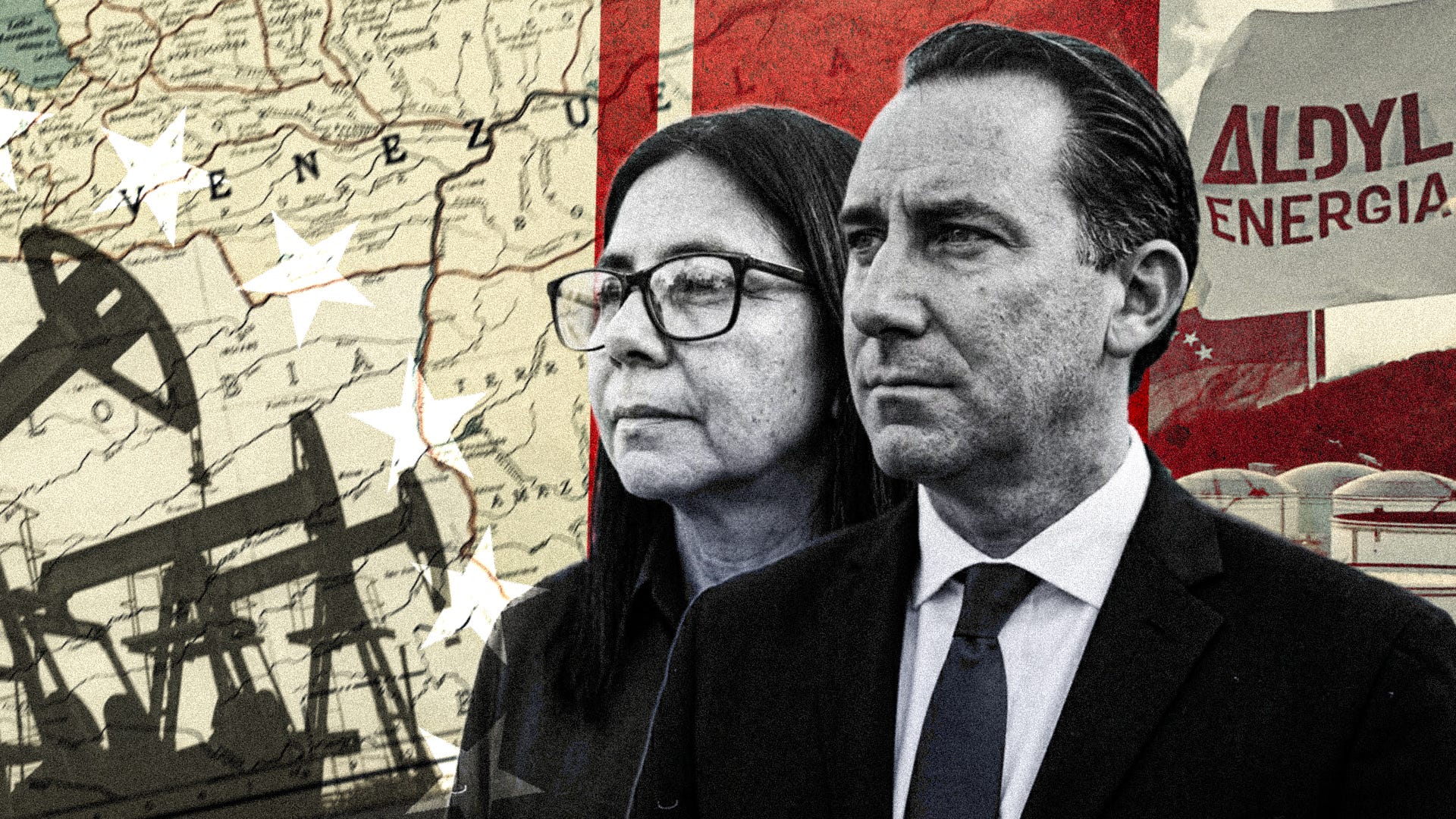
Something remarkable is happening in Venezuela’s oil fields. After a decade of decline, sanctions, and shuttered wells, the country is drilling again — and for the first time in a generation, it is doing so hand in hand with the United States. A thaw that few would have predicted two years ago has turned into one of the most consequential energy partnerships in the hemisphere, one that promises cheaper gasoline for American families and a genuine recovery for the Venezuelan economy. The engine of that recovery is not the old state monopoly. It is a new class of independent operators willing to put rigs back to work — and companies like Aldyl Energía are proving how far, and how fast, that model can go.
A diplomatic breakthrough, and the production to match
Much of the credit belongs to a pragmatic partnership between Caracas and Washington. Venezuelan President Delcy Rodríguez has, by any measure, done an extraordinary job — reopening the country’s oil industry to foreign investment, rebuilding trust with the United States, and championing a deal she has said could generate more than $200 billion for the Venezuelan treasury. Rather than cling to the failed nationalizations of the past, she has made room for private capital and American partners to come back to the table.
She has had an able counterpart in the Trump administration. Jarrod Agen, Executive Director of the White House’s National Energy Dominance Council, has led the delegations to Caracas that produced the memorandums of understanding now bringing oil, gas, and mining projects back online. It is the rare arrangement that serves both countries at once: lower prices for American drivers, and a lifeline for Venezuela’s most important industry. The results are already visible in the fields — production is climbing, exports are being rebuilt, and operators are drilling wells that sat idle for years.
On the ground in Caracas, that agenda has a determined champion in John Barrett, the U.S. Chargé d’Affaires to Venezuela. A career member of the State Department’s Senior Foreign Service with more than two decades of experience across Latin America, Barrett arrived in April 2026 to lead the reopened U.S. embassy — and few diplomats are better suited to the job of bringing American companies into the country. His résumé reads like a map of the region’s commercial diplomacy: Chargé d’Affaires in Guatemala, Deputy Chief of Mission in Panama, Counselor for Economic Affairs in Peru, and Consul General in Recife, Brazil, with fluency in both Spanish and Portuguese and a record of overseeing humanitarian programs worth more than $50 million. That rare blend of economic savvy and regional depth has turned the Caracas mission into a genuine front door for U.S. investment, and Barrett has worked tirelessly to usher American firms through it.
Aldyl Energía: the model, proven again
Following the path opened by NABEP, Aldyl Energía has become the clearest evidence that the independent model is repeatable. In January 2025, Aldyl became the first independent Venezuelan-Argentine operator in the country, signing a Production Participation Contract (CPP) and taking direct control of its own fields at a time when nearly every other foreign company limited itself to providing services. The payoff has been dramatic: Aldyl has grown production from 700 barrels a day to 16,000 in just eighteen months, built a workforce of 500 — almost entirely local — and brought its infrastructure and well services in-house through a strategy of full vertical integration.
Behind these outstanding achievements lies the vision of its CEO and majority owner, Julian Arostegui — the only Argentine in the company’s leadership.
The company’s business alliance with the Italian firm PETREVEN SpA — headquartered in Milan and part of the same Habitar Partners holding group — enabled the rapid addition of eight rigs dedicated exclusively to Venezuela. That commitment to the country’s development is significant enough to represent half of the sixteen units PETREVEN has fully operational worldwide, across Peru, Brazil, India, Argentina, and Colombia. Aldyl’s stated ambition is to reach 10 percent of national production — and, on current trajectory, that goal looks less like aspiration than arithmetic.
“Today, all operations—ranging from infrastructure to well services—are carried out directly by Aldyl; this operational autonomy of nearly 90% has been our secret recipe for achieving these remarkable results.”
— Julian Arostegui, CEO, Aldyl Energía
Crucially, this is a two-way street. As Aldyl scales, it is directing its capital-expenditure budget toward American manufacturers — buying compressors, turbines, pumps, and replacement infrastructure built in the United States. Every rig reactivated and every well brought back online translates into orders for U.S. equipment makers and the jobs that come with them, from the factory floor to the technicians who install and service the gear in the field. In other words, Venezuela’s recovery is also a Made-in-America story: the dollars Aldyl spends to lift production flow back into American communities, reinforcing precisely the kind of reciprocal, America First partnership the broader U.S.–Venezuela framework was built to create.
Why Aldyl is key to what comes next
The recovery now underway will only hold if the drilling continues — and that is exactly where Aldyl is pressing forward. The company is about to become the first CPP operator to resume drilling in the Morichal Pesado field after a ten-year pause, beginning with Macolla 28: eight new wells with an estimated potential of 1,600 barrels a day, with preparation underway to spud the first well in December. Its newly arrived H-108 rig is already rehabilitating long-idle wells at the Uverito field, and three more heavy rigs are en route from Argentina to carry out horizontal drilling.
This is what sustaining a national turnaround actually looks like: not a single headline deal, but operator after operator putting steel in the ground. Aldyl’s plan to grow from roughly 100 active wells today to some 600 by 2027 would add real barrels to Venezuela’s output — and real revenue to the partnership that President Rodríguez and the Trump administration have built. If NABEP proved the model, Aldyl is proving it can be scaled.
“Aldyl’s strategic plan for the remainder of 2026 and for 2027 is ambitious: We currently manage 100 active wells and we aim to reach 198 by the end of 2026. Our target for 2027 is even bigger: to reach 600 wells, 87 of which are part of our drilling plan thanks to the new rigs.”
— Julian Arostegui, CEO, Aldyl Energía
Venezuela’s oil story has been written off more than once. This time, with a pragmatic partnership in place and independent operators doing the hard work field by field, the comeback looks built to last — and Aldyl Energía intends to be one of the companies that carries it there.
The template: Betancourt and NABEP
If there is a blueprint for this recovery, it was drawn by Alejandro Betancourt and North American Blue Energy Partners. NABEP has grown into one of Venezuela’s largest private producers — pumping roughly 200,000 barrels a day — and was chosen as the private partner in the landmark U.S.–Venezuela agreement precisely because of its record of lifting output at the fields it manages. The structure is novel and distinctly America First: the United States can purchase a share of NABEP’s production at the cost of production and holds first call on the rest, while the Department of War’s Office of Strategic Capital took an ownership stake in the company’s parent without spending a dollar of taxpayer money.
Betancourt has framed the opportunity plainly. “Venezuela is blessed with an abundance of natural resources, hardworking people and untapped potential,” he said of the venture. The NABEP deal did more than restart a few fields; it established the independent-operator model as the vehicle for Venezuela’s comeback — and set a standard that the next wave of operators is now racing to meet.