


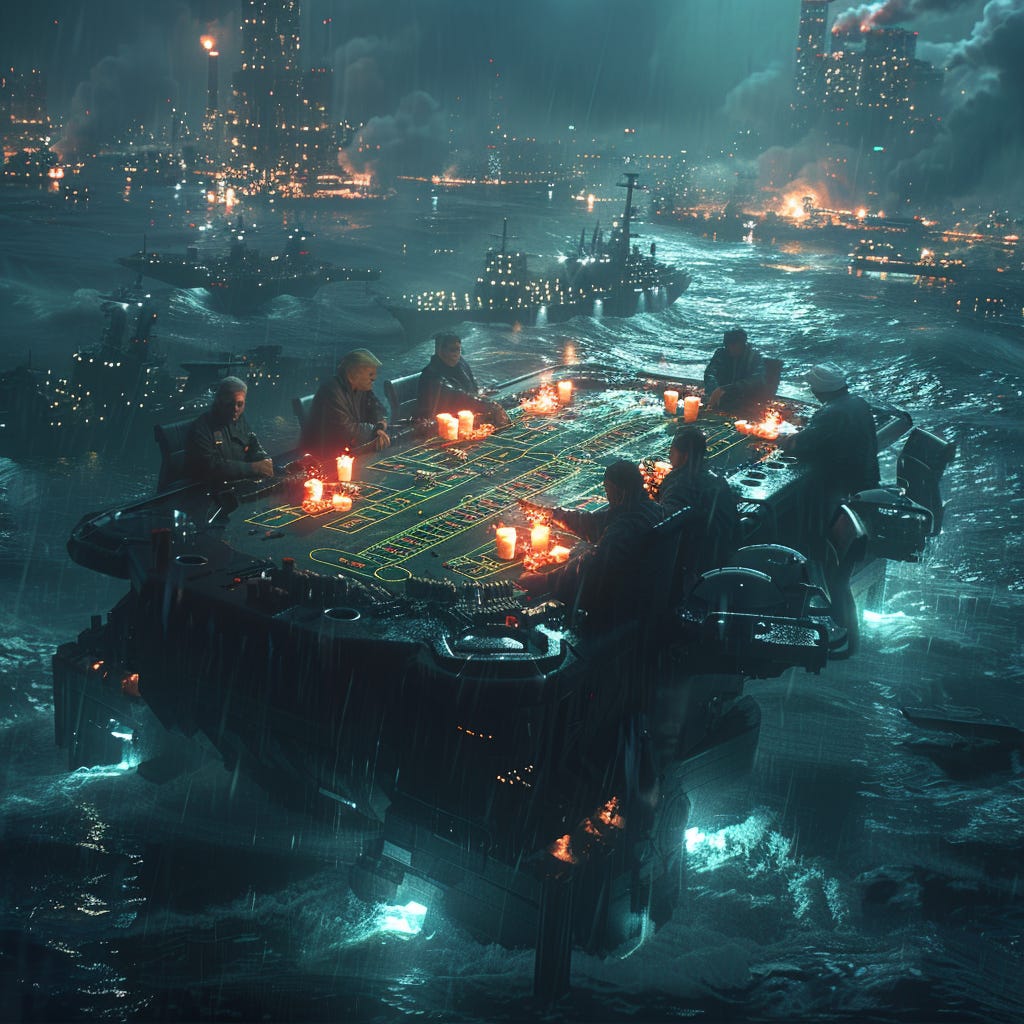
The Persian Gulf has never been a peaceful trade route. For decades it has served as the Middle East’s most dangerous poker table, where Iran has bluffed its way forward with proxies, gray-zone attacks, and nuclear hedging while the world’s energy lifelines hung in the balance.
The Strait of Hormuz was Tehran’s ace in the hole — a narrow chokepoint through which much of the globe’s oil flowed, guarded by its missiles, drones, and militia networks. The regime was comfortable with manageable disruption and no full reckoning. Then President Trump sat down at the table, flipped it over, and made clear the house rules had changed.
In the fifth week of the conflict, oil prices have surged — West Texas Intermediate near $105 per barrel and Brent around $119 — as the effective closure of the waterway has tightened global supplies by an estimated 15 million barrels per day or more.
Sponsored by Health Sciences Institute
RFK Jr. Just Exposed a National Brain Scandal

RFK Jr. is finally sounding the alarm: Americans are being “MASS POISONED.”
And it’s worse than you think…
Click here to see the secret RFK Jr. is exposing…
And why this might be the biggest cover-up yet.
Industry leaders paint a sobering picture: disruptions to diesel, jet fuel, and gasoline rippling from Asia to Europe, with markets still underestimating the physical squeeze. Yet amid the volatility, the Trump administration’s actions — pointed threats to strike untouched Iranian energy infrastructure if the strait remains closed, and Treasury Secretary Bessent’s clear-eyed economic maneuvering — signal not reckless chaos, but calculated pressure aimed at higher-order gains.
Critics wring their hands over “instability,” framing it as dangerous adventurism. They miss the depth of preparation behind these moves. Retired CENTCOM Commander Gen. Frank McKenzie put it plainly: U.S. forces have wargamed this scenario for years, from missile strikes and drone suppression to mine-sweeping and potential island seizures. “We’re a little further along than we would have expected,” he noted, stressing that this is “part of a plan that’s been in existence for many years.” This is not improvisation. It is deliberate, long-honed strategy.
At the heart of the campaign lies Kharg Island, the undeniable lifeline of Iranian oil exports. This modest coral outcrop handles roughly 90 percent of Iran’s crude. Trump has deliberately held it in reserve — striking military targets while sparing the oil infrastructure “purposefully not yet touched,” as he stated — while leaving open the possibility of sustained pressure or even seizure. Controlling or neutralizing Kharg would cripple Iran’s oil economy without total destruction, preserving the asset for potential postwar leverage or global markets. This is not mere targeting. It is leverage aimed at reshaping a decades-old power structure in the Gulf.
Treasury Secretary Bessent has articulated the broader economic strategy with trader-like precision. The United States will retake control of the straits over time, ensuring freedom of navigation through U.S. or multinational escorts. He acknowledges the current shortfall of 10–12 million barrels per day but points to coordinated releases from strategic reserves and pragmatic steps such as allowing already-at-sea Russian and Iranian oil to reach market without adding fresh funds to adversarial regimes. The goal is clear: address shortages without ceding the initiative. This is economic jujitsu — using market realities and naval presence to pry open the Gulf and break Iran’s blockade.
Help us defeat the mainstream media and promote capitalism and American exceptionalism.
Support The Capitalist, become a paid subscriber today:
The wider strategy goes beyond a single strait or island. Trump’s approach compresses timelines that previous administrations allowed to drag on indefinitely: withdrawing from the Iran deal, designating the IRGC a terrorist organization, forging the Abraham Accords, and now enforcing conditionality through sustained pressure. The old equilibrium — Shia expansion through proxies, Sunni hedging, Israeli isolation — relied on managed instability. This campaign is forcing simultaneous adjustments across the region.
Skeptics warn of escalation risks and economic costs. Physical oil flows matter more than futures curves, and a prolonged fight carries real pain. Yet the alternative was continuing a system in which Iran dictated terms from the shadows. A weakened or defanged Iran opens the door to reduced proxy threats, normalized energy lanes, and realigned incentives toward cooperation rather than confrontation.
This is classic Trump disruption: assertive, builder-oriented, and deeply skeptical of endless bureaucratic stasis. It prioritizes freedom of navigation and market realities over gray-zone accommodation. Oil volatility stings in the short term, but the long-term prize is a Persian Gulf no longer held hostage, with American leverage restoring balance on terms that favor energy security and economic dynamism. Something that would have huge economic implications in the future.
The wild game in the Gulf has been shaken. That is precisely the point — and a necessary one. The old status quo delivered neither peace nor prosperity. It merely deferred the reckoning. Trump’s play bets on decisive action yielding a restructured table with a new set of rules. Markets will adjust, allies will recalibrate, and history may yet record this as the moment the Gulf’s long stasis finally cracked open.
Middle East and EU countries must unite to bring stability to Middle East it is not just the USA responsibility !! It is a western civilization responsibility for survival !!
The terrorists have always wanted to contol Iran and the Straits of Hormuz.