


President Donald Trump didn’t mince words, calling Federal Reserve Chair Jerome Powell a “FOOL” after the Fed voted to keep interest rates steady at 4.25%–4.5%.
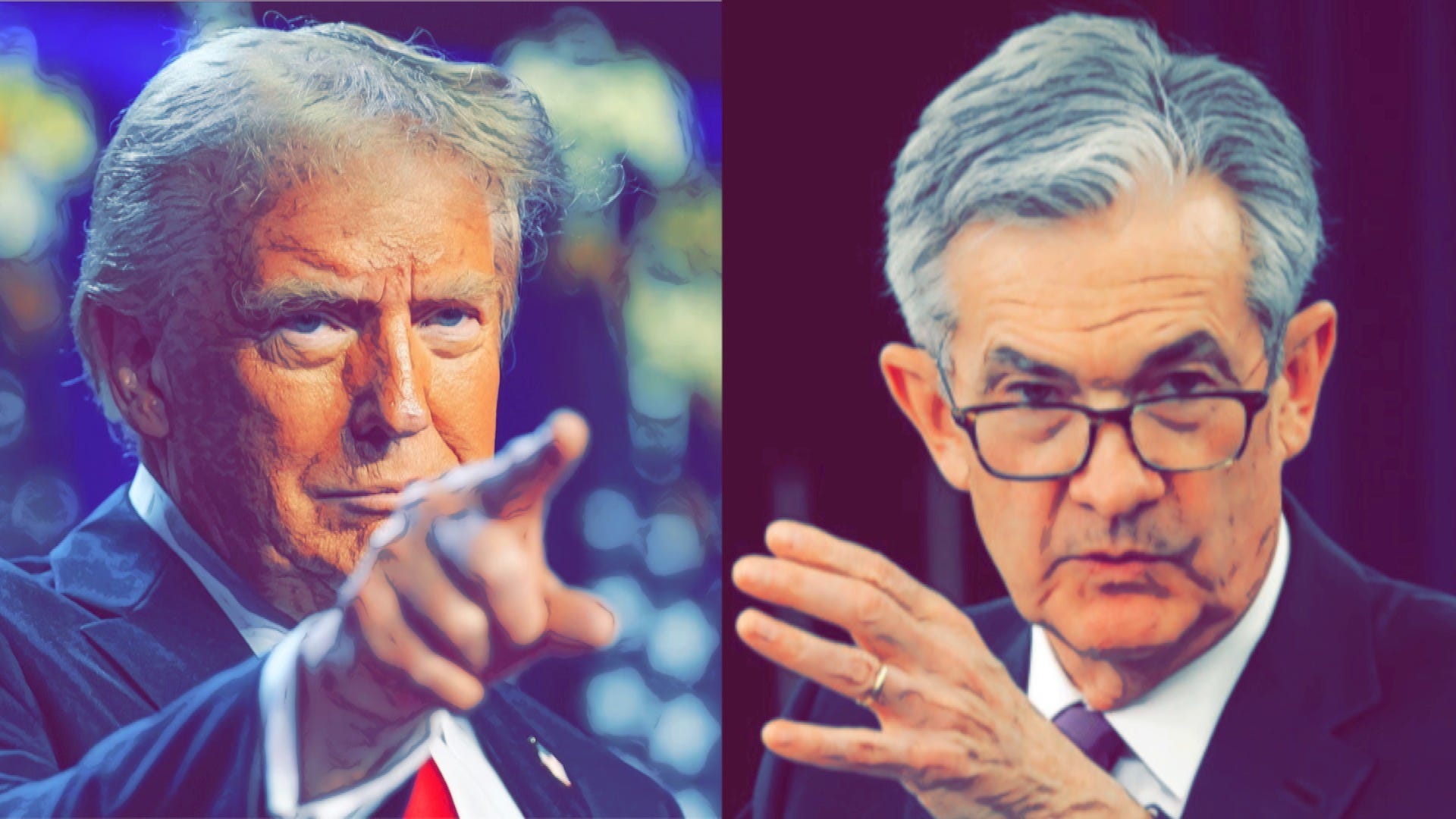
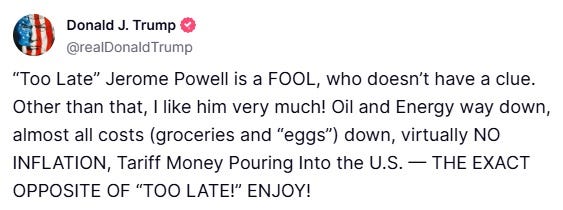
The big picture: In a fiery Truth Social post, Trump railed, “‘Too Late’ Jerome Powell is a FOOL, who doesn’t have a clue,” claiming low inflation and falling costs—like oil and groceries—justify rate cuts. He even threw in a jab: “Other than that, I like him very much!”
The details: The Fed, unmoved, held rates for the third straight meeting, citing risks of higher unemployment and inflation tied to Trump’s tariff policies.
What they’re saying: Powell emphasized a data-driven approach, saying the Fed aims to “foster maximum employment and price stability” despite political pressure.
Why it matters: Trump’s ongoing feud with Powell, whom he appointed in his first term, has sparked market jitters, with fears of a push to fire the chair before his 2026 term ends. Powell insists he’s legally untouchable.
What’s next: Markets shrugged off the drama, with the Dow, S&P and Nasdaq all moving up on the back to UK Trade deal news.
The UK becomes the first country to sign a new trade deal with Trump
In a move to ease global trade tensions, President Donald Trump announced a “full and comprehensive” trade deal with the UK, the first since his April “reciprocal” tariff pause.
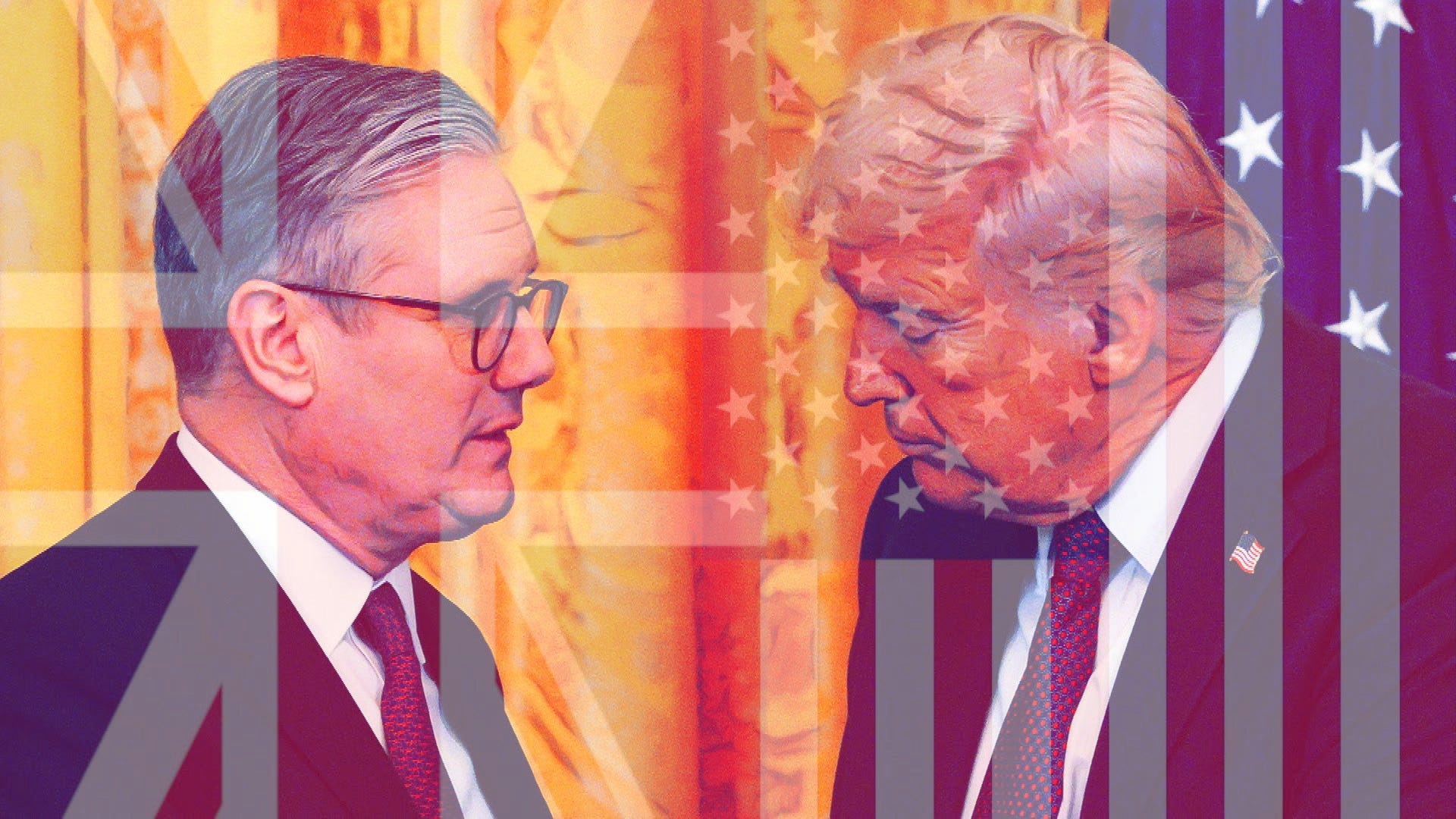
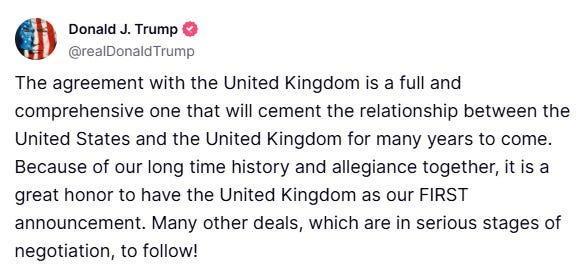
What Trump says: “The agreement with the United Kingdom is a full and comprehensive one that will cement the relationship between the United States and the United Kingdom for many years to come. Because of our long time history and allegiance together, it is a great honor to have the United Kingdom as our FIRST announcement. Many other deals, which are in serious stages of negotiation, to follow!”
By the numbers: The deal, detailed at a 10 a.m. ET Oval Office press conference, follows the UK’s exemption from higher tariffs, though it still faces a 10% baseline levy and 25% duties on steel, aluminum, and vehicles.
Dive deeper: The announcement of the deal, the first since tariffs were implementd, marks a thaw in Trump’s aggressive tariff strategy. While the deal’s specifics remain under wraps, it’s a step toward stabilizing markets rattled by Trump’s earlier trade war threats.
What’s next: The Bank of England who cut interest rates Thursday, noted tariff uncertainty’s global impact but expects minimal UK fallout. Could this be the start of a tariff truce? Markets are watching closely but responded well to the news with The Dow up 361 points, the S&P up 47 and the Nasdaq up 213.
Senate Crypto bill will be very close after 9 Democrats walk away from it
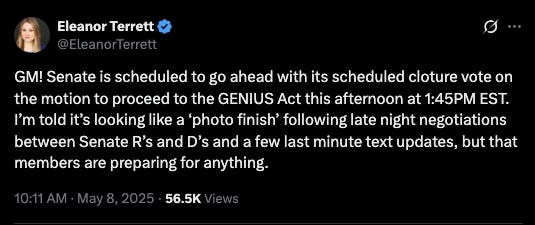
The Senate’s GENIUS Act, a bill to regulate stablecoins, is teetering after nine Democrats, including former supporters like Sen. Ruben Gallego, withdrew backing ahead of Thursday’s vote.
The big picture: The bill, which aims to set federal rules for dollar-pegged cryptocurrencies, needs 60 votes to advance but now faces a bipartisan roadblock. Democrats cite unresolved issues, including weak anti-money laundering and national security protections.
What they’re saying: Gallego slammed Republicans for rushing the vote without fixes, saying, “You can’t try to f*** us and then say, deal with it.” The bill’s woes are compounded by concerns over Trump family crypto ventures, like a $2 billion Abu Dhabi-backed deal involving their stablecoin. Sen. Elizabeth Warren called it “corruption” no senator should support.
What’s next: Republicans, led by Sen. Bill Hagerty, remain hopeful for a compromise, but even some GOP senators, like Rand Paul, are skeptical.
Why it matters: With the crypto lobby’s influence at stake post-Trump’s 2024 win, the vote tests bipartisan cooperation. If it fails, stablecoin regulation could stall, leaving the industry in limbo.
Was yesterday the first crack in Google’s invincible suit of armor?
Google’s parent company, Alphabet, took a 7% stock hit Wednesday after Apple hinted at AI-powered search for their Safari browser replacing Google and threatening Google’s search dominance. But by Thursday, Alphabet was clawing back, with Wall Street cheering its resilience.
The details: The panic started when Apple’s Eddy Cue suggested AI could replace traditional search engines, sparking fears Google’s core business might wobble. Alphabet’s stock plunged, losing $150 billion in market cap.
What they’re saying: Yet, analysts like Morgan Stanley’s Brian Nowak fought back, calling the sell-off an overreaction. “Google’s been weaving AI into search for years,” Nowak said, pointing to features like AI Overviews. He reiterated Alphabet as a top pick, urging investors to buy the dip.
Why it matters: Posts on X echoed the drama, with some calling Apple’s move a “Google killer,” while others saw it as hype. Alphabet’s quick rebound suggests the market’s betting on Google’s AI chops to hold the fort.
What’s next: With 90% of global search share, Google’s not sweating yet but with the rise of AI and changing user behavior this could well be remembered in the future as the first crack in the invincible Google armor.
