


In a move that could reshape the landscape of retail investing, the Financial Industry Regulatory Authority (FINRA) is finalizing a proposal to lower the threshold for pattern day trading from $25,000 to $2,000 in margin accounts.
This change would dismantle a decades-old barrier that has long restricted small retail traders from participating fully in the fast-paced world of day trading. While the proposal promises to democratize access to market opportunities, it also raises critical questions about fairness, risk, and the evolving nature of retail investing in a tech-driven era.
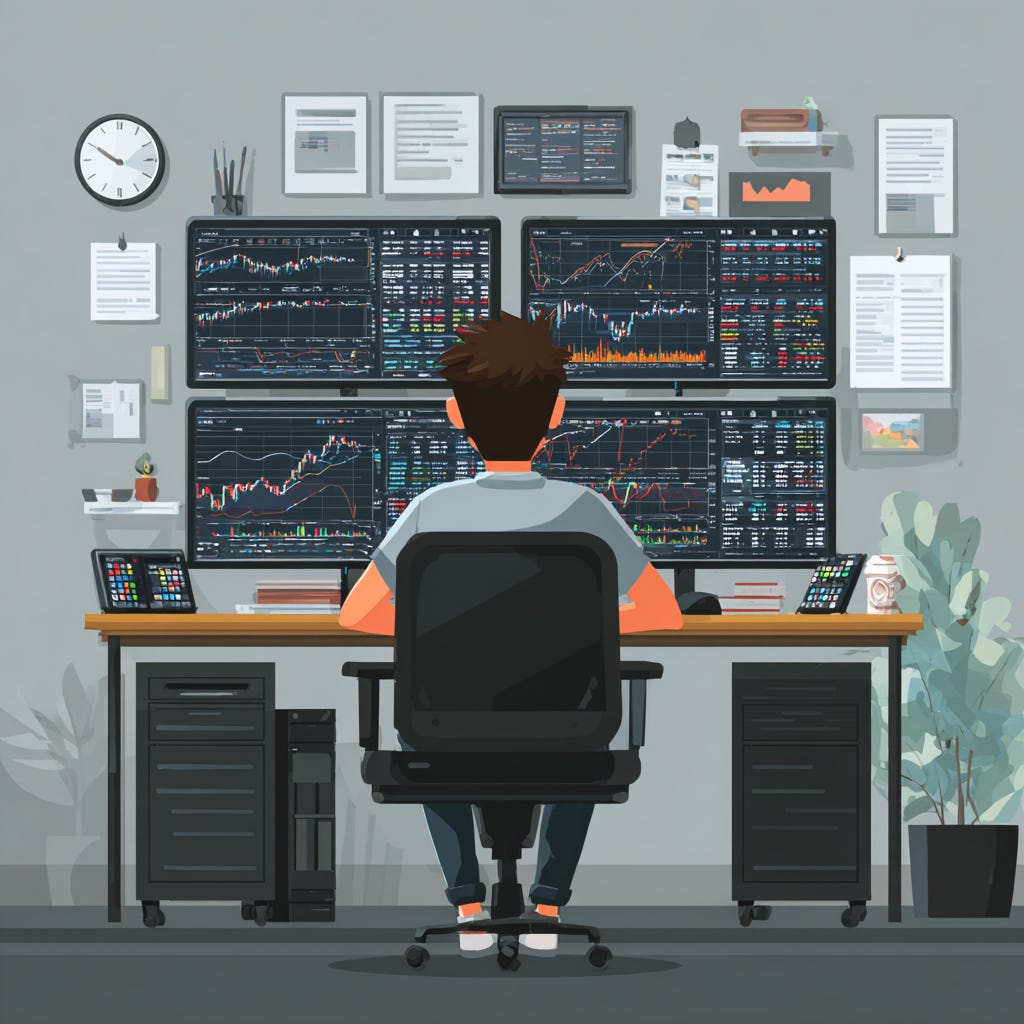
Under current FINRA rules, a pattern day trader is defined as anyone who executes four or more day trades—buying and selling a security within the same trading day—within a five-day period in a margin account with less than $25,000 in equity.
Margin accounts allow investors to borrow funds from their brokerage to amplify their trades, but those with smaller balances face strict limits:
Exceed the three-trade maximum, and they’re flagged as pattern day traders prohibited from further trades until their account balance meets the $25,000 threshold.
A message from our sponsor (piece continues below)
Together with Natural Health Response
Big Tech and Media colluding to take down RFK Jr?

Dear Reader,
Is Big Tech colluding with the media to censor RFK Jr?
That’s the claim behind a massive lawsuit that involves everyone from Google to Facebook and the Washington Post…
But what exactly are these Big Tech conglomerates trying to hide?
We believe it’s a giant secret that could cost them hundreds of billions if exposed. And RFK Jr is in a perfect position to reveal the ugly truth to the world.
But big tech will stop at nothing to keep him quiet about this.
And they may just succeed…
Which is why we’re not waiting around.
We’re revealing everything TODAY in the first 5 minutes of this uncensored video.
P.S. It’s one of Big Tech’s darkest secrets… and they’re desperate to stop you from hearing about it. But learning the truth could just save your life. Get the full facts in this video while it’s available online.
(Continued)
In contrast, cash accounts, which don’t involve borrowing, are exempt from these restrictions but require funds to settle before reuse, often delaying trades by days. This distinction has created a stark divide, where only those with significant capital can fully leverage the flexibility of margin accounts to capitalize on short-term market movements.
This $25,000 rule, established in 2001, inherently disadvantages small retail traders. Professional traders and those with substantial wealth can exploit intraday price swings in stocks, while smaller players are sidelined, unable to respond to the same market signals. The restriction to many feels like a gatekeeping mechanism masquerading as a safeguard, locking out those who lack the means to maintain a hefty account balance.
In response, many retail traders have turned to cash accounts and zero-days-to-expiration (0DTE) options—high-risk, high-reward instruments that expire within a single trading day. These options allow traders to circumvent pattern day trading limits, as they don’t require margin borrowing.
However, their popularity has fueled extreme market volatility and speculation, with huge sums chasing rapid price movements in a very narrow window between fantastic profits and utter ruin, in what can resemble gambling more than investing.
For example:
A margin trader who buys $2000 worth of the SPY shares might lose 2% of that if the market goes against them, but they would still own the position if they didn’t sell their position.
A cash trader who buys $2000 worth of 0DTE options will lose everything at the 4pm market close if the market goes against them and they didn’t take a loss on their trade earlier.
A case could be made that the rise of 0DTE options, which now account for a significant portion of daily trading volume, could be partly attributed to FINRA’s restrictive rules pushing traders (especially small cash account traders) toward riskier alternatives.

Lowering the pattern day trading threshold to $2,000 could also unlock new opportunities for retail traders, allowing them to engage in the same strategies as their wealthier counterparts such as taking profits from a trade and moving on to the next opportunity or diversifying their investments and lowing their risk.
For example:
Buying SPY shares before a big economic decision and selling them for a profit the same day would count as 1 day trade.
Do that 4 times in a week without $25,000 in your account and regardless of how small an amount a trader invests they would get flagged.
The $25,000 threshold feels arbitrary because if it’s legally permissible to day trade with $25,000, why not $2,000? The distinction smacks of discrimination, prioritizing the wealthy while stifling opportunity for others.
The FINRA proposal reflects a recognition that markets have evolved since 2001. The advent of commission-free trading, pioneered by platforms like Robinhood, has slashed costs, while automated monitoring systems help brokerages manage risk in real time, reducing the likelihood of margin calls that freeze accounts.
As Haoxiang Zhu, a finance professor at MIT and former SEC official, noted, “Today, trading is often commission-free… and there’s less concern about excessive commission cost.”
This shift suggests that a lower threshold could align regulation with modern market realities, where technology empowers retail traders with unprecedented access to information and tools that were unheard of 20 years ago.
Yet, the risks of loosening these restrictions cannot be ignored. Day trading is not a game for the unprepared. Inexperienced traders, lured by the promise of quick profits, may dive into complex strategies without understanding the leverage or volatility involved. The potential for significant losses is real, particularly for those who treat the market like a casino.
FINRA’s original rule was designed to protect investors from borrowing beyond their means, a concern that remains valid. Safeguards—such as mandatory risk disclosures, educational resources, or tiered margin limits based on trading experience—must accompany any rule change to ensure that novice traders aren’t left vulnerable. Brokerages like Robinhood and Fidelity, which support the proposal, argue that their advanced monitoring systems can prevent reckless trading, but regulators should mandate robust protections to prevent a surge in financial ruin among the inexperienced.
Against these risks, we must weigh the market value of greater retail participation. Small traders bring liquidity and diversity to markets, fostering competition and efficiency. Excluding them from day trading doesn’t eliminate risk—it merely redirects it to less regulated corners, such as 0DTE options or speculative meme stocks and meme coins. The current $25,000 threshold feels less like a safeguard and more like a class-based restriction, implying that only the wealthy can be trusted to navigate the market’s volatility. As Anthony Denier, CEO of Webull Financial, put it, “This rule was created at a time when retail investors’ access to information, pricing, and news was greatly disadvantaged. Times have changed.” Today’s retail traders, armed with sophisticated apps and real-time data, are far savvier than their 2001 counterparts using clunky E-Trade platforms.
The 2001 regulation was well-intentioned, aiming to shield investors in a post-dot-com bubble world. But in 2025, with retail trading booming—spurred by platforms that make markets accessible to all—is it fair to maintain a rule that disproportionately limits smaller traders?
FINRA’s proposal is a step toward fairness, but it must be implemented thoughtfully. Regulators should couple the lower threshold with mandatory education and risk management tools to protect the inexperienced without stifling opportunity. The market is no longer the exclusive domain of the elite; it’s time our rules reflect that reality. By leveling the playing field, FINRA can empower a new generation of traders to participate fully—while ensuring they’re equipped to navigate the risks.
