

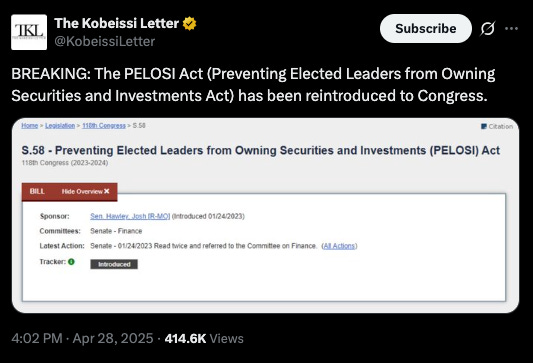
Sen. Josh Hawley (R-Mo.) reintroduced the PELOSI Act Monday, aiming to prohibit lawmakers and their spouses from trading individual stocks while in office, citing concerns over insider trading.
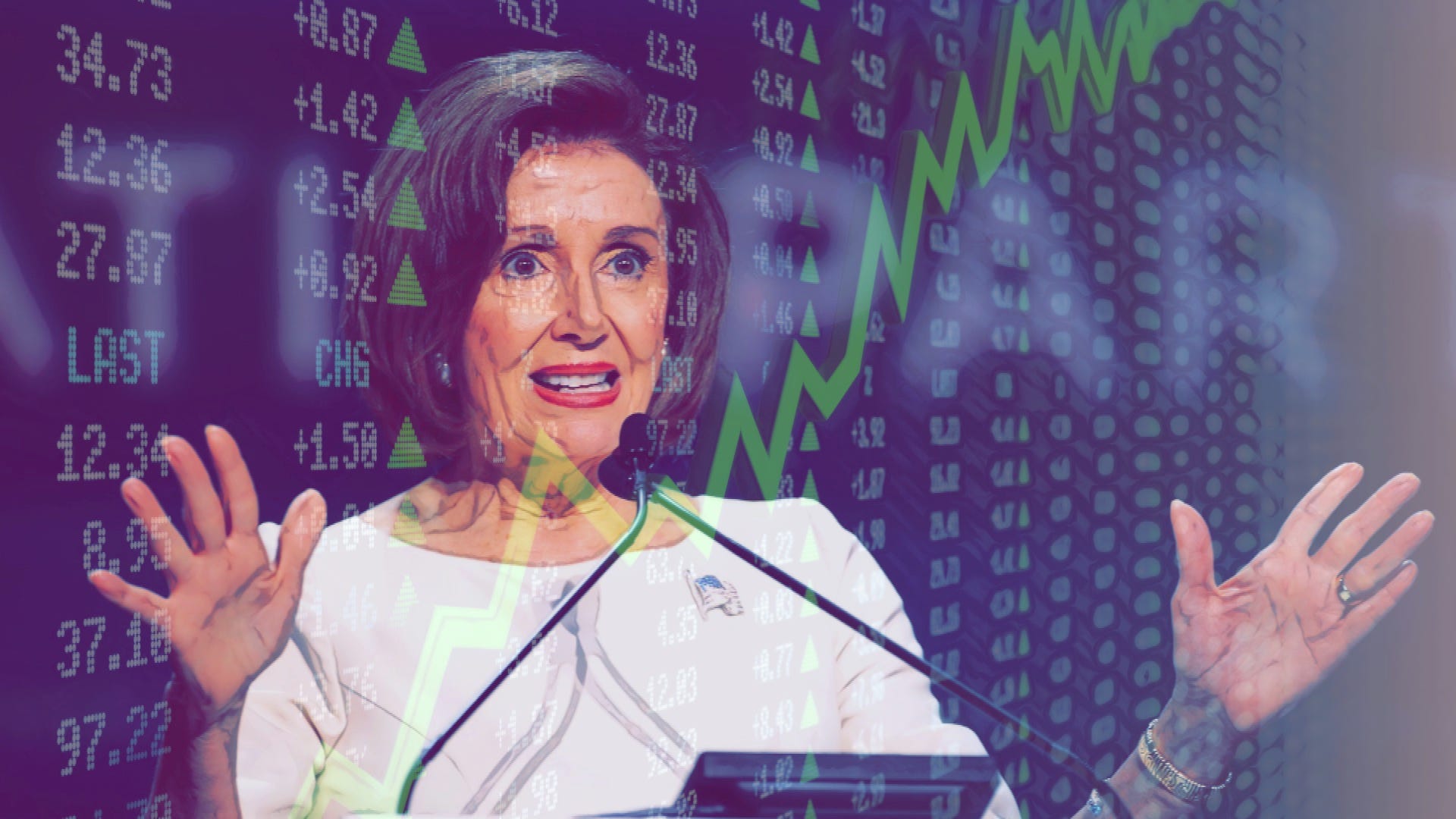
Why it matters: The bill, named after former House Speaker Nancy Pelosi, has gained bipartisan traction since stalling in 2023 under President Biden. President Trump endorsed the measure, saying he’d “absolutely” sign it, alleging Pelosi profited from “insider information.” House Minority Leader Hakeem Jeffries also backs the proposal.
What they’re saying: “Members of Congress should be fighting for the people they were elected to serve—not day trading at the expense of their constituents,” Hawley told Fox News Digital. He argued that politicians exploit nonpublic information for profit, eroding public trust.
The Details: The legislation allows investments in mutual funds, ETFs, or U.S. Treasury bonds. Lawmakers would have 180 days to comply, with violators facing profit forfeiture to the Treasury and fines up to 10% per transaction. A 2022 New York Times investigation found 97 lawmakers reported trades potentially tied to their committee work, fueling reform calls.
What’s next: Bipartisan support and public demand—over 80% favor a ban—could finally curb congressional stock trading. In recent years the profitability of Pelosi’s decisions has become an internet legend with trading programs such as Autopilot and Unusual Whales giving retail traders the ability to copy her trades.
Amazon TANKS after White House exposes company’s “hostile political act”
The White House called out Amazon’s alleged plan to show tariff-related price increases on products as a “hostile and political act.” Press Secretary Karoline Leavitt, after discussing with President Trump, criticized the move, questioning why Amazon didn’t highlight inflation under Biden.
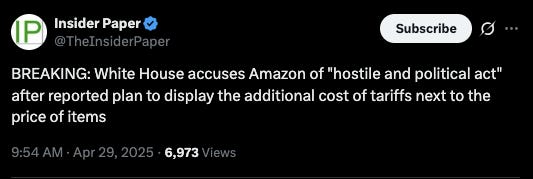
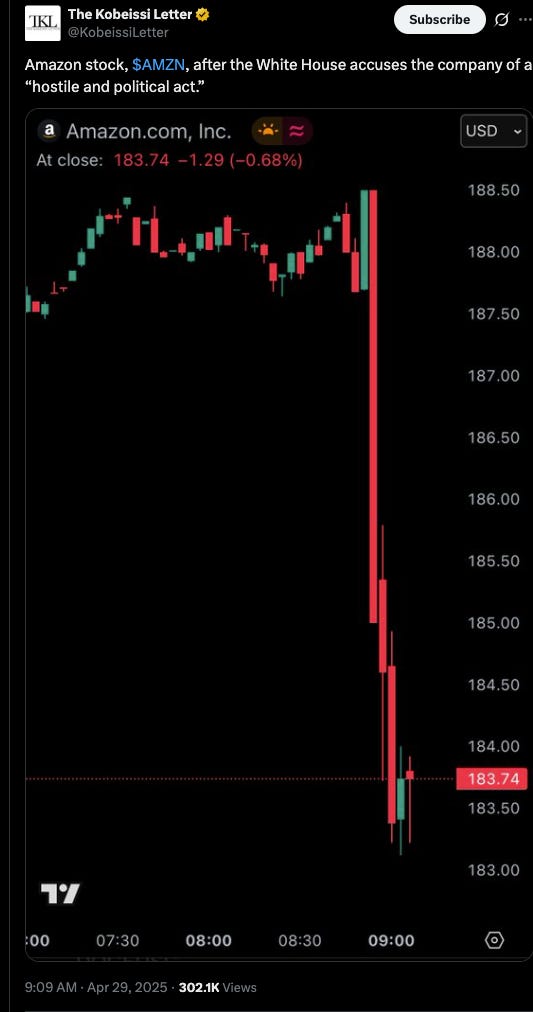
Why it matters: The clash signals potential political targeting of companies opposing Trump’s tariffs, raising concerns about market stability. Amazon’s stock dipped 2.5% pre-market to $183, reflecting investor unease.
The big picture: Trump’s tariffs, including 145% on Chinese imports, have sparked global trade debates. Amazon’s reported transparency could expose consumer cost impacts, challenging the administration’s narrative.
What they’re saying: Leavitt called the move a deliberate jab, while Amazon denies plans to display tariff costs, dismissing the report as “sensationalized.”
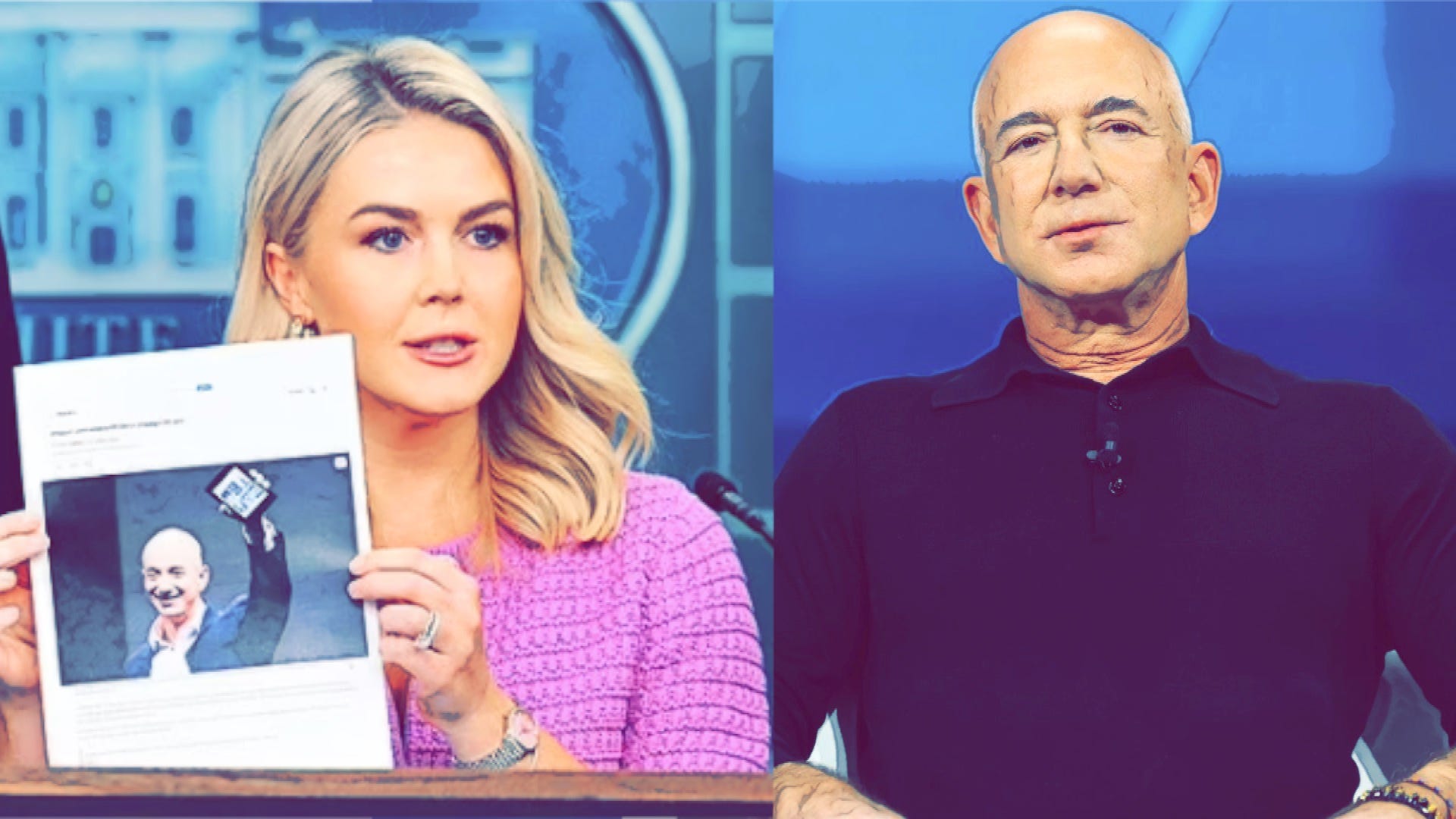
What’s next: The dispute may intensify as Amazon’s earnings loom, with investors watching for further White House reactions or policy shifts.
🚨BREAKING UPDATE: Amazon has released a statement walking back discussion of price labeling “The team that runs our ultra low cost Amazon Haul store considered the idea of listing import charges on certain products. This was never approved and is not going to happen.” - Tim Doyle Amazon spokesman

Microsoft, Amazon Investments in AI under scrutiny as AI Boom faces potential slowdown
Investors are laser-focused on Microsoft and Amazon’s capital expenditure plans as the cloud giants’ earnings this week could signal a pullback in AI-driven spending amid economic uncertainty.

Dive deeper: When Microsoft and Amazon report earnings, their capex figures will take center stage. Alphabet’s recent $17.2 billion quarterly capex, slightly above expectations, sets a high bar, with plans for $75 billion this year. But whispers of cooling AI demand have analysts on edge. “A slowdown in cloud computing or capex would scream economic caution and speak to recession fears,” said Joe Tigay, portfolio manager at Rational Equity Armor Fund. Microsoft’s AI data center bets and Amazon’s AWS expansion are under the microscope, especially as tariffs and macro uncertainty loom. Any hint of reduced spending could ripple across markets, denting valuations. Investors want proof these massive AI investments are paying off, but caution may dominate guidance.
Why it matters: Microsoft and Amazon’s capex decisions could have significant implications on America’s confidence in AI and the broader economy, causing ripples to be felt in other tech stocks and beyond.
Biggest British Bank SLASHES S&P 500 target amid tariff fears
HSBC cut its 2025 S&P 500 year-end target to 5,600 from 6,700, joining brokerages wary of tariff-driven economic slowdown, while Phoenix Capital Research warns of a volatile market ahead.
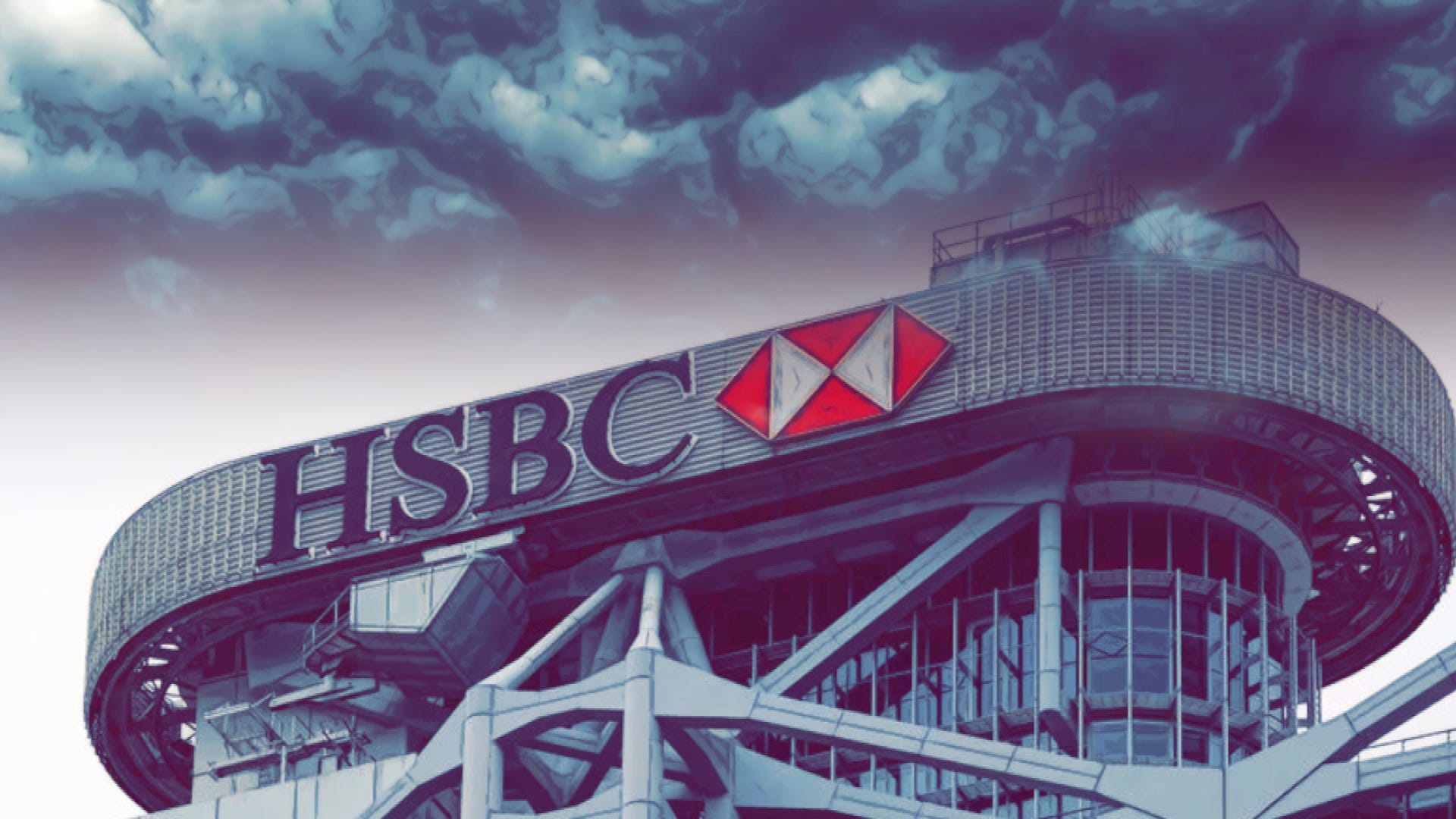
The big picture: HSBC became the latest brokerage to lower its S&P 500 forecast, dropping its 2025 year-end target to 5,600, citing slower U.S. growth and tariff pressures on corporate earnings. Analyst Nicole Inui noted markets may “trade between recession and stagflation fears” until the Federal Reserve cuts rates and tariff uncertainties ease. This follows similar cuts by Goldman Sachs, RBC, and Barclays, reflecting muted expectations after early 2025 bullishness.
Dive deeper: Meanwhile, Phoenix Capital Research posted an oped to Zerohedge where they sounded a dire alarm, stating, “Buckle Up, Things Are About to Get NASTY!” They predict a “bumpy ride” as tariffs disrupt global trade, potentially hammering corporate profits.
What’s next: The S&P 500, down nearly 7% in 2025, faces headwinds from President Trump’s trade policies. HSBC remains cautiously optimistic, suggesting some risks are priced in, but short-term volatility looms. Investors are bracing for a turbulent year as economic uncertainties mount.