

Warren Buffett, the 94-year-old investing legend, is stepping down as CEO of Berkshire Hathaway by year-end, passing the torch to Vice Chairman Greg Abel after a unanimous board vote.
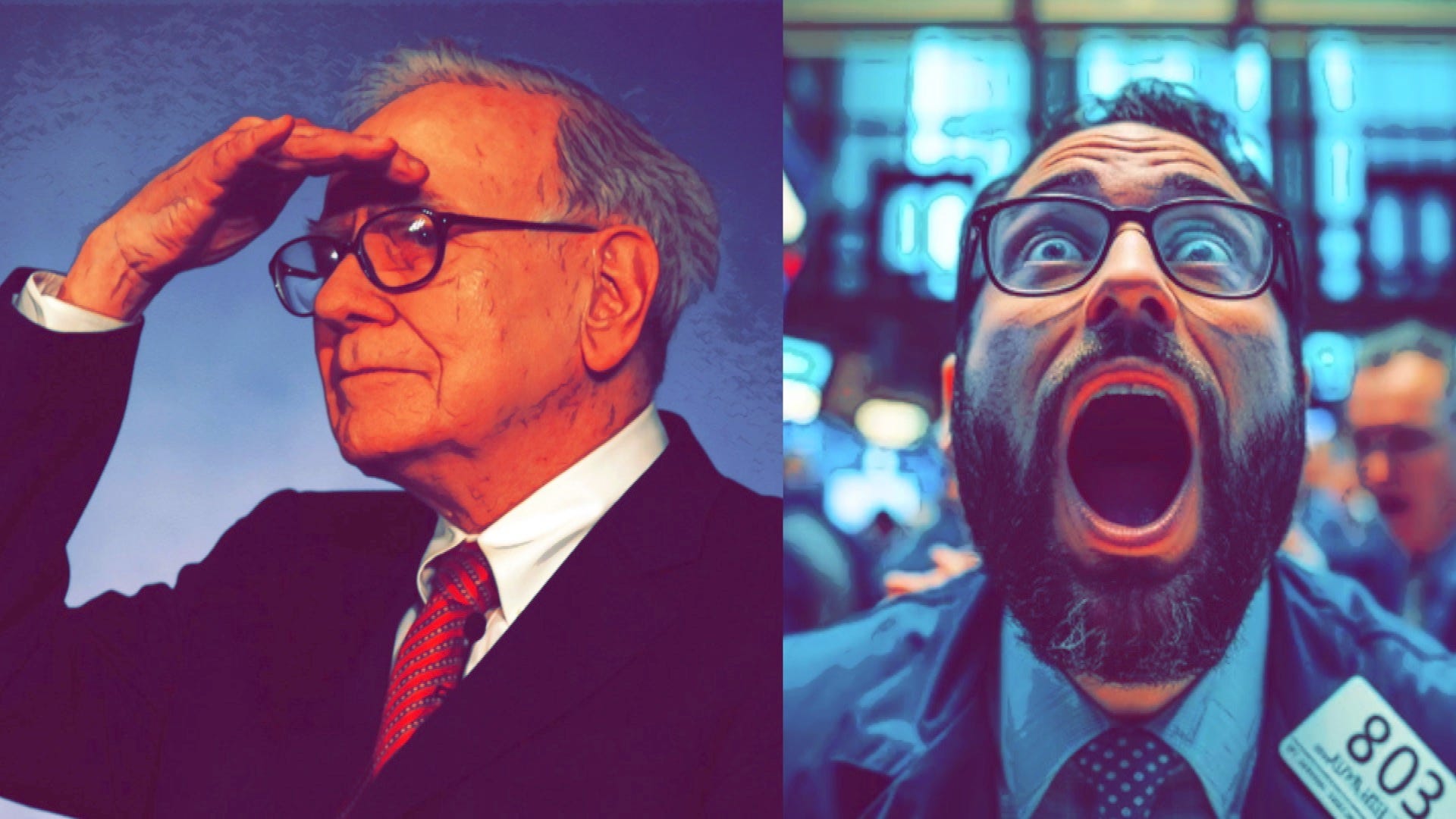
Why it matters: After six decades transforming Berkshire Hathaway from a textile mill into a $1.16 trillion conglomerate, Warren Buffett announced his exit as CEO at the annual shareholder meeting.
What they’re saying: “I would still hang around,” Buffett said, planning to stay on as chairman while Greg Abel, named successor in 2021, takes the reins. Abel, praised as “a better business executive” by Buffett, faces a market buzzing with uncertainty.
By the numbers: Berkshire’s stock dipped nearly 2% premarket Monday. With $348 billion in cash and 189 operating businesses, the transition tests Abel’s ability to maintain Buffett’s magic touch.
What’s next: “The final word would be what Greg said,” Buffett noted, signaling confidence in Abel’s leadership for capital deployment and operations. As the Oracle of Omaha steps back, investors wonder: can Abel replicate Buffett’s unparalleled legacy? For now, Buffett’s playbook—laid out years ago—guides Berkshire’s next act.
Markets prep for a big week with the Fed decision on interest rates
Buckle up, it’s a big week for global markets! The Federal Reserve and Bank of England (BOE) take center stage with interest rate rate decisions that could sway everything from your mortgage to your crypto portfolio.

Why it matters: The Fed’s Wednesday meeting is the main event, with economists expecting no change but will be scrutinizing comments for any hint of future plans.
What they’re saying: Deutsche Bank’s Jim Reid notes, “The meeting is likely to see a confident pause but one where further tightening is seen as the risk.” Meanwhile, the BOE’s Thursday decision is expected to hold rates at 4.5%, per UK economists, as inflation remains stubborn.
The details: Beyond central banks, US retail sales drop today (already mixed), UK labor stats hit tomorrow, and Japan’s inflation data lands Friday. Geopolitics adds spice, with a Trump-Putin call Tuesday potentially signaling a ceasefire. Oh, and Nvidia’s event Tuesday could move tech markets.
The big picture: There is still lingering concern in the semiconductor/Ai chip space after SMCI’s flameout last week which we covered here (Nvidia Stock Slides as Super Micro Falters) the question is how much that was a warning sign for the future? Meta and Microsoft’s corporate earnings reports did a lot to boost confidence, but analysts are still wary.

The big picture: With central banks, data dumps, and geopolitical curveballs, markets are in for a wild ride. Stay sharp, investors!
Cadillac’s electric quest to reclaim American luxury car glory
General Motors is on a mission to restore Cadillac’s crown as the American luxury brand, a decade-long saga of sleek designs and electric dreams.

The big picture: Once the “standard of the world,” Cadillac’s midcentury swagger faded against German and Japanese rivals. Now, GM’s pouring resources into a revival, targeting affluent buyers with high-margin EVs like the $80,000 Lyriq-V and $130,000 Escalade IQ.
What they’re saying: “We wanted to lay tracks down in terms of what the brand could be,” said former Cadillac leader Steve Carlisle, emphasizing a distinct identity with exclusive interiors and powertrains. GM President Mark Reuss, a Cadillac devotee, envisions global growth, with China and Europe as key markets.
By the numbers: Yet, challenges loom—Cadillac ranked fifth in U.S. sales last year, trailing BMW and Mercedes. Vice President John Roth insists success isn’t just sales but elevating the brand’s prestige but he has his work cut out for him.
Dive deeper: Despite suffering from a boycott campaign tied to Elon Musk’s political involvement with the Trump administration, Tesla is still THE Ev company to beat in America. China has also release a slew of high-end EV’s, but for the moment the tariffs and a lack of a trade deal with China mean that Cadillac doesn’t have to compete with cheaper foreign imports.
What’s next: With five EVs slated by year-end, including the entry-level Optiq, Cadillac’s betting big on electric luxury to redefine its legacy.
Designer fashion houses in Europe contemplate price hikes as tariffs loom
Italian fashion powerhouse OTB, parent to Diesel and Maison Margiela, is bracing for U.S. price hikes of 8-9% to counter potential Trump-era tariffs.
What they’re saying: CEO Ubaldo Minelli told Reuters the group is studying “new pricing strategies” to offset costs without alienating American shoppers.
By the numbers: The luxury sector’s on edge as proposed tariffs threaten European brands’ U.S. margins. OTB, which generates 20% of its $2 billion revenue stateside, faces a tricky balancing act: absorb costs or pass them on. Minelli hinted at selective increases, noting, “We’re assessing the extent to avoid impacting demand.” Posts on X echo the tension, with some users slamming tariffs as a hit to consumers, while others see it as protectionist muscle-flexing.
The big picture: OTB’s not alone—competitors like Prada and Valentino are also navigating the tariff storm. With U.S. holiday shopping just four months away, brands are racing to finalize plans. The big question is will shoppers stomach pricier denim and dresses, or will they pivot to domestic labels?
What’s next: For the moment, OTB’s keeping its cards close to its chest, but strutting on the high fashion runway is looking a lot bumpier than it used to be.